Marine Protected Areas – Why do we need them?
We live on a blue planet. Oceans cover about 70% of the Earth’s surface, hold 97% of its water, and represent 90% of all habitable space on the planet. Coastal ecosystems such as mangroves, coral reefs, kelp forests, saltmarshes and seagrass beds belong to the most biodiverse systems of the oceans and are the nurseries for millions of marine species. Some tropical coral reefs can hold up 1,000 different species per m2. With 15% of dietary intake of animal protein provided by fisheries and millions of people depending on fisheries for their livelihoods, these nursery grounds are essential to replenish commercial fish stocks. Furthermore, coastal systems are amazing at absorbing or sequestering carbon at rates up to 50 times those of the same area of tropical forests. Therefore, coastal areas are immensely important in the fight against the climate crisis.
However, our coastal ecosystems, and with them the many species that rely on them, are degrading and disappearing at alarming rates. Today, over 60% of the human population lives on or near a coastline and 80% of tourism is concentrated near coastal areas. Overfishing, pollution, ocean acidification and unsustainable resource extraction has severe impacts on the health of our coasts. 60% of the world’s major marine ecosystems that support livelihoods have already been degraded or lost and more than half of the world’s marine species will face extinction by 2100 if we don’t take drastic actions.

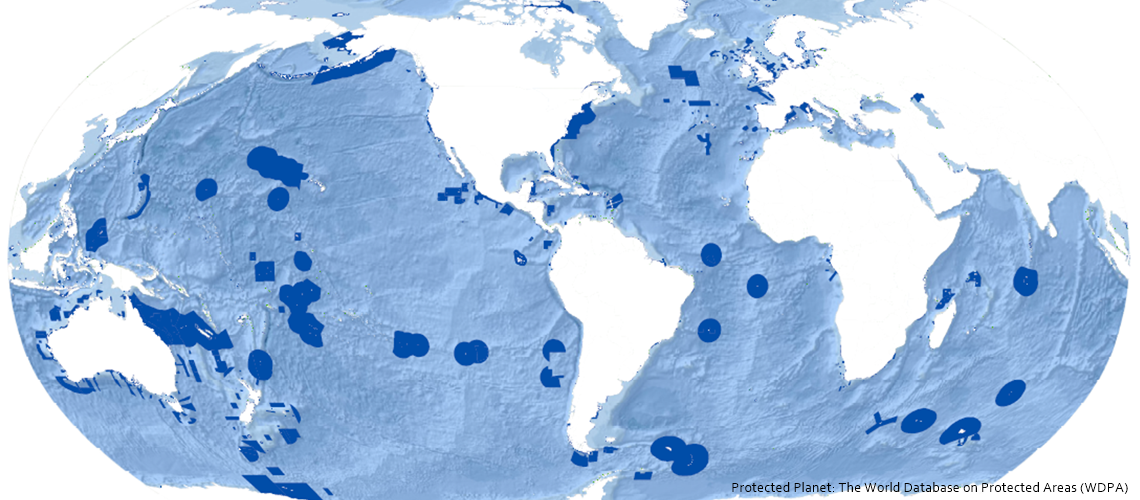
One of the most effective means for protecting coastal biodiversity is through the establishment and proper management of Marine Protected Areas, or MPAs. The World Wide Fund for Nature (WWF) defines MPAs as “An area designated and effectively managed to protect marine ecosystems, processes, habitats, and species, which can contribute to the restoration and replenishment of resources for social, economic, and cultural enrichment.”
Some MPAs completely inhibit human activities, while others attempt to regulate human presence and activity, to render the use of marine resources more sustainable and more diverse. The benefits of properly designed and managed MPAs are plentiful and diverse. They protect coastal biodiversity and ecosystem services and increase ecosystem resilience and productivity. Fisheries depend on this. Furthermore, healthy coastal ecosystems offer coastal protection against storm surges, that become increasingly strong and common with climate change. More than that, they offer increased sustainable recreational and eco-tourism opportunities, thereby creating new jobs, and also offer an excellent opportunity for scientific research and environmental education.

We depend on healthy coastal ecosystems, for coastal production, nutrition, carbon absorption and sequestration, livelihoods, and cultural and spiritual practices. Yet, less than 10% of coastal areas are efficiently protected. This poses a direct threat to coastal biodiversity but also to our own economic prosperity and societal survival. For these reasons, an MPA well managed network covering at least 30% of the ocean’s surface is needed to guarantee the recovery and protection of the world’s coastal and marine ecosystems and resources. Our very own survival depends on this.
Sources: IUCN, WWF, UNESCO.
Text written by Félix Feider.

Related Posts