• Sign in

  • Join for free
  • Home
  • News
  • About
    • The ODYSSEA Team
    • Sponsors
    • Collaborators
  • Projects
    • Events
    • Past Projects
    • Research and Conservation
  • Support Us
  • Publications
  • Photos
  • Contact
ODYSSEA

Search

    • en
    • fr
  • info@odyssea.lu
0
ODYSSEA
  • Menu
  • Home
  • News
  • About
    • The ODYSSEA Team
    • Sponsors
    • Collaborators
  • Projects
    • Events
    • Past Projects
    • Research and Conservation
  • Support Us
  • Publications
  • Photos
  • Contact

Tag : conservation

Home » Tagged "conservation" (Page 2)
  • 20180803_60D_IMG_0216_WVB Nanuuq (SE)
    22October

    A Humanities Student in a World of Science – Reflecting

    Article written by Jaz Henry. He studies English Literature and Philosophy and always thought the world of marine conservation was slightly out of his grasp, not having studied Biology or Zoology. So, this summer, he decided to let experience decide whether pursuing this line of work is the right choice for him. After applying to various projects, he was accepted as an intern for the Namibian Dolphin Project. This is the third post in a series of articles recounting his weekly experiences as a humanities student in a world of science and conservation.

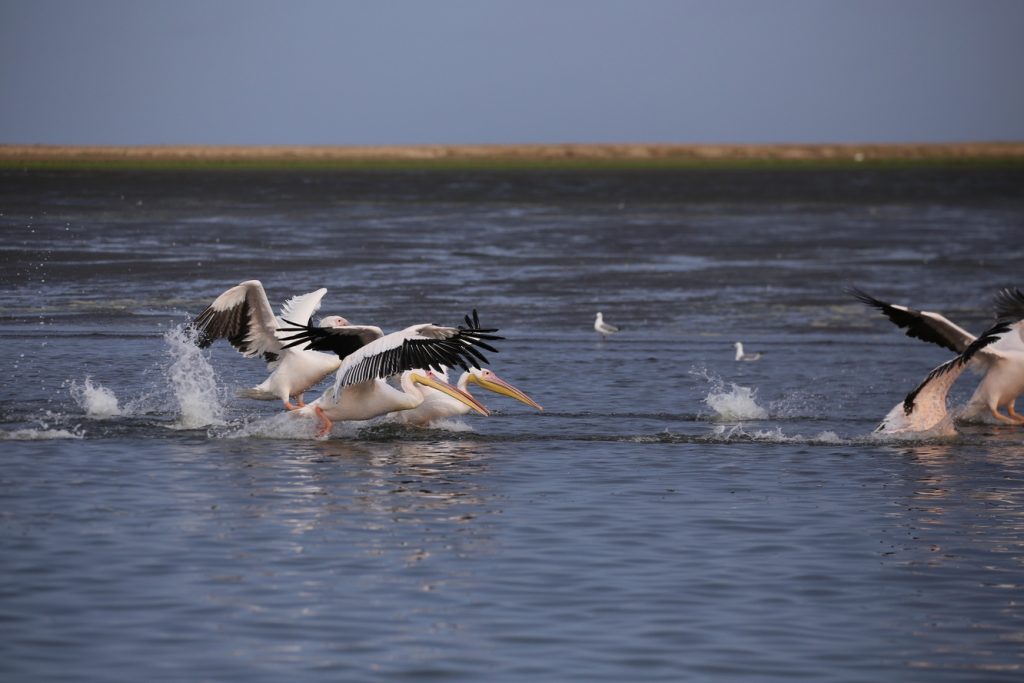
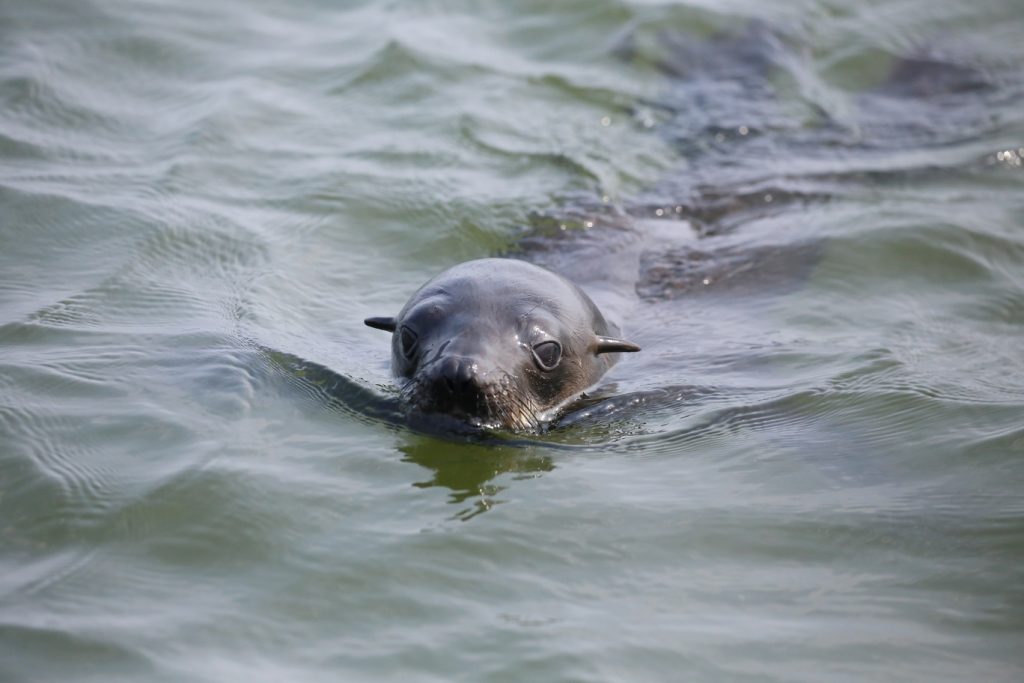
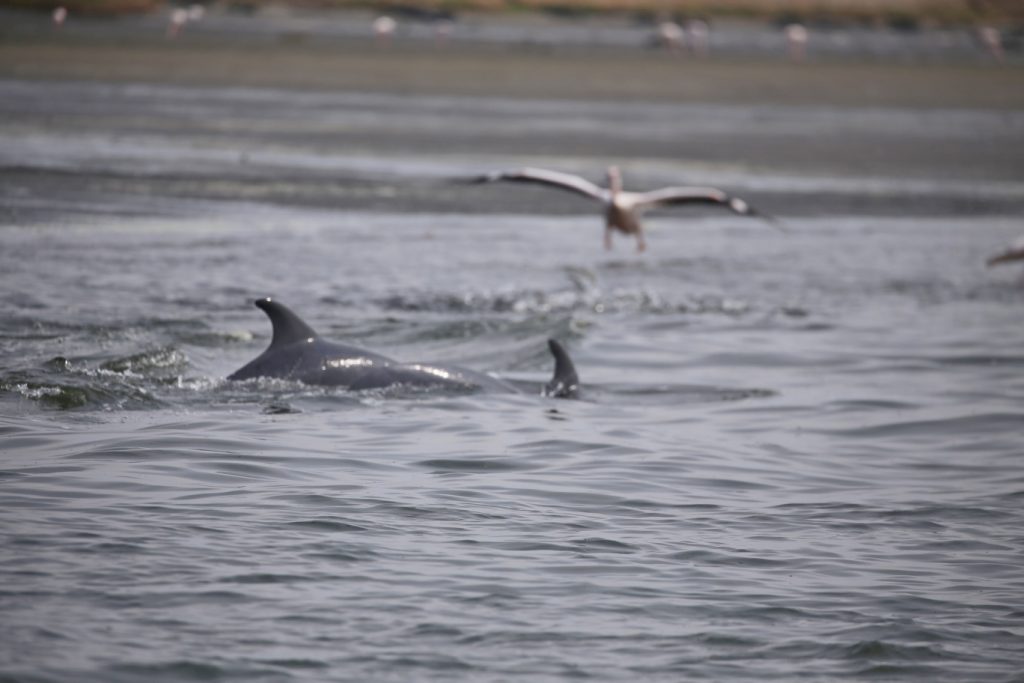
    Another week, another journey. While I can say that this week was not as hectic as the last two, it was not short of weird and wonderful moments. To start the week, a beautiful scene which made me eat my sarcastic words from last week’s article when I said “[i]t might seem like it’s all life and beauty on Blue Planet”. We began that day by observing bottlenose dolphins in the lagoon, before we had even launched the boat. Keeping an eye on their progress, we hurried to get on the water and ended up following a large group of around ten dolphins for two and a half hours. Immersed in a feeding frenzy, the cetaceans surrounded our vessel and rushed across the surface of the ocean, hunting fish. What made this experience stand out, was the addition of groups of pelicans and Cape fur seals all together behind the dolphins, nabbing the fish that managed to jump out of the reach of the cetaceans. It was an immense sight and depiction of the food chain. As if the whole scenario was not awesome enough, a bronze whaler (Carcharhinus brachyurus) breached into the air multiple times beside one of the tour boats nearby. This all occurred just offshore, where the cetaceans were feeding, and thus seals and jackals could also be sighted on the beach in the background. It was the best kind of sensory overload.

    dolphins_pelican
    Dolphins, pelicans and seals, all feeding together. An interspecies banquet. Photographers (left to right): Darren DuPlessis, Simon Elwen, idem.
    fursealpup

    Dolphins, pelicans and seals, all feeding together. An interspecies banquet. Photographers (left to right): Darren DuPlessis, Simon Elwen, idem.

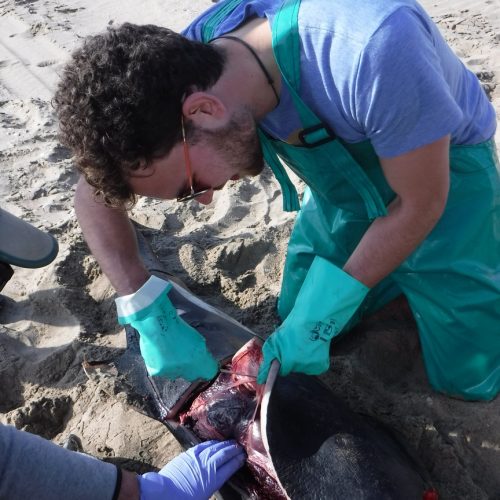
    To counterbalance the lively ecstasy of this encounter, we were called out a few days later for a Heaviside’s dolphin stranding on the west stretch of beach around Walvis Bay. The animal was dead, but well preserved. Whilst one may wish that the animal was never stranded in the first place, such specimens are perfect opportunities for the NDP to collect valuable data on the health and condition of the Heaviside’s dolphin population around Walvis Bay, a population that the project monitors closely. As such, we dissected the animal on the beach and performed a brief necropsy. We found that its lungs were riddled with worms, something Heaviside’s dolphins commonly suffer from, and it can kill them in extreme cases. I had recently been involved in the dissection of a pygmy sperm whale and the experience came in handy as I could take blubber and skin samples, dissect lung and kidney tissue, and analyse these each in turn. I felt comfortable during this process and my mind was more focused on the task at hand than the gore. Experience was already paying off, and it felt good knowing that the morbidity I had felt during the last necropsy had now translated into a practical skill.

    Necropsies do not get less gruesome, but you start focusing on a different aspect of the job. 
Photographer: Monique Laubscher
    Necropsies do not get less gruesome, but you start focusing on a different aspect of the job. Photographer: Monique Laubscher

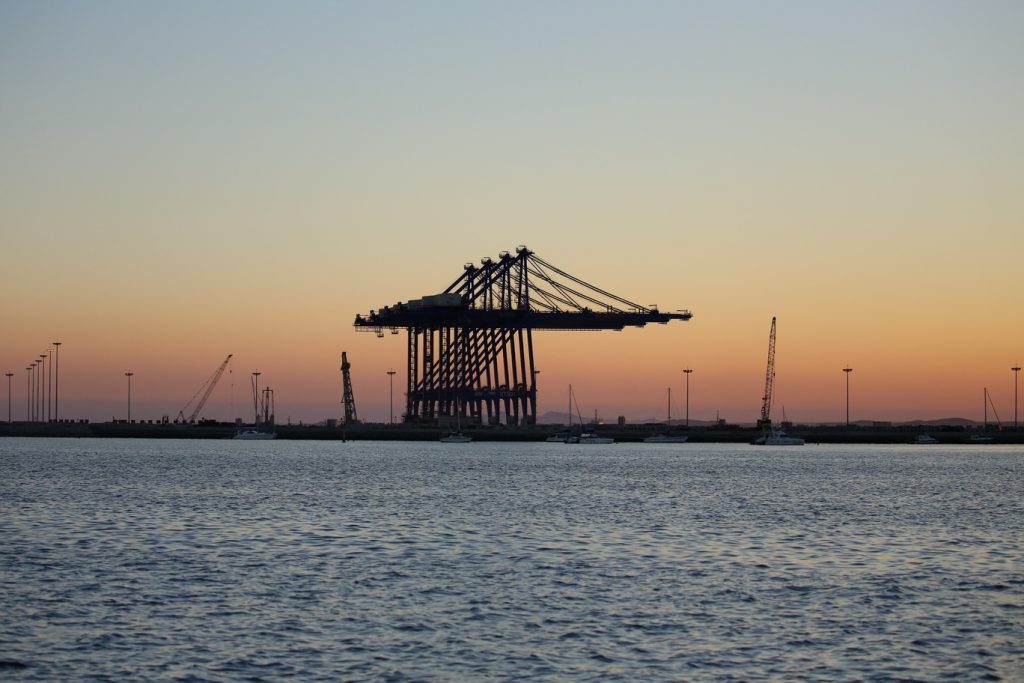
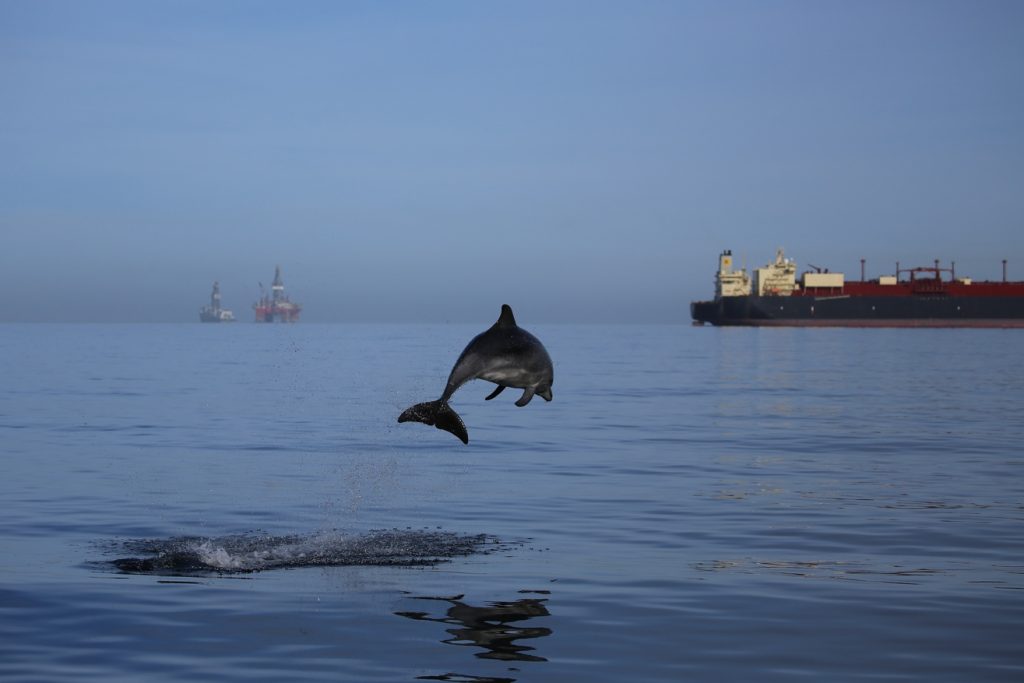
    Noise pollution wins this week’s problem. In the actual bay of Walvis Bay, there are numerous industrial ships anchored everywhere. Some of these ships are tied together to lower anchoring costs, resulting in sights such as eight huge shipping freighters that float adjacent to each other, casting a threatening shadow. Furthermore, there is an oil rig that stands tall and ugly at the edge of the bay. The issue is that all these boats and rigs leave all their equipment such as sonar on and running, so that they are emitting noise all year around throughout the bay, even if they are not being used. Sonar has been shown to be a factor leading to mass strandings of marine mammals and certain species (such as the Beaked whale) are especially sensitive to the mid-frequency noise of sonar. Add to this the noise from the eager tour boats that I have previously mentioned, and the level of noise below the surface in the bay becomes a concern. The NDP is attempting to tackle this issue by conducting research on the effects of noise pollution on cetacean behaviour, so as to be able to officially underline the extent of the problem. They have made some progress already, but these effects are hard to quantify and analyse precisely and it remains a considerable task to fully understand the ins and outs of the issue.

    What I learned this week is a compilation of the lessons I learnt in the previous weeks. Conservation is complex, and it is crucial to address that complexity without being overwhelmed. It is easy to think conservation is one benevolent journey after another and that once you get into it, you will be making a difference with everything you do. The reality is that for every problem you think you find a solution to, another one will appear. In these three weeks I have encountered one issue facing cetaceans and other animals after another, be that noise pollution, tourism or entanglement. There were moments where it felt a lot like there is no way of solving all these problems without new ones coming up, and sometimes that is the case. The amount of death I have been exposed to during my stay furthered these thoughts. But when you witness scenes like the feeding frenzy of dolphins, pelicans and seals, or the journey of a mother humpback whale with her calf and all the other moments where nature shows itself at its finest, you realise that while bad things will always happen, you are not trying to prevent death or reverse the laws of nature, you are trying to minimise human impact on the natural way of things and protect the lives of living beings that cannot communicate to us through words what imbalances exist. Focusing on one problem at a time and doing what you can to solve that problem is one weight added in favour of nature, tipping the scales ever so slightly towards the animal’s side.

    Link to week 1, week 2, and week 4 articles.

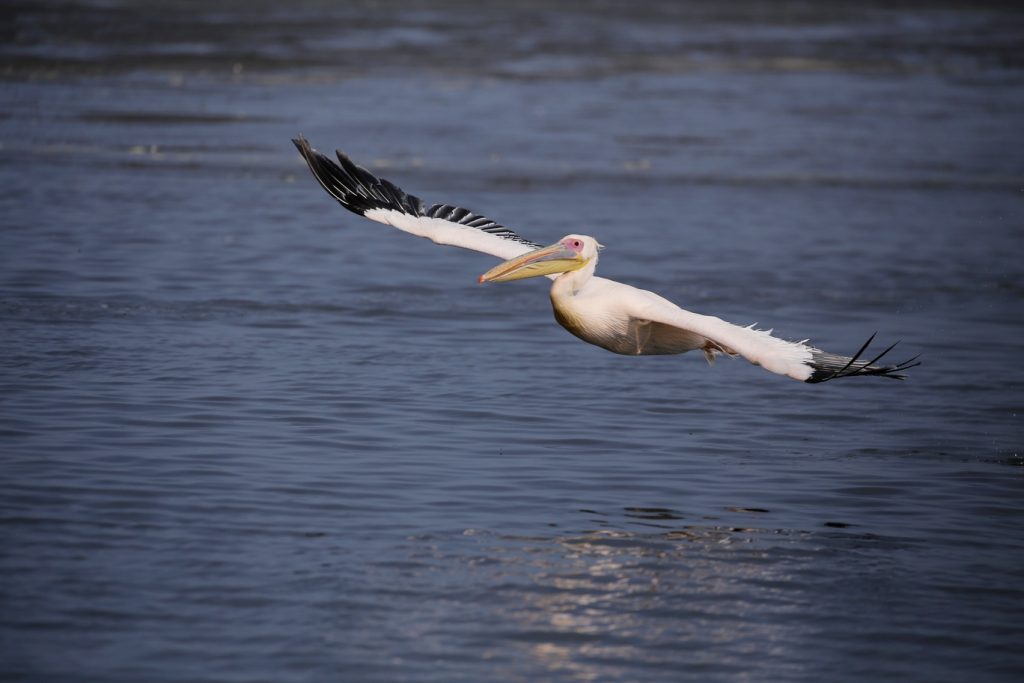
    • A pelican soars through the air. 
Photographer: Simon Elwen
    • A bottlenose cruising by. 
Photographer: Jaz Henry
    • One of the many noise sources. Photographer: Simon Elwen
    • Bottlenose dolphin in busy Bay. Photographer: Simon Elwen
    NamibianDolphinProject Logo_W&B

    You can find more information on the research, conservation and outreach projects of the Namibian Dolphin Project on their website. Here you can also check for upcoming internship opportunities if you want to experience Namibian conservation work firsthand.

  • 20180812_6D_IMG_0218_WVB Pelican Point survey (MLaubscher)
    15October

    A Humanities Student in a World of Science – Analysing

    Article written by Jaz Henry. He studies English Literature and Philosophy and always thought the world of marine conservation was slightly out of his grasp, not having studied Biology or Zoology. So, this summer, he decided to let experience decide whether pursuing this line of work is the right choice for him. After applying to various projects, he was accepted as an intern for the Namibian Dolphin Project. This is the second post in a series of articles recounting his weekly experiences as a humanities student in a world of science and conservation. 

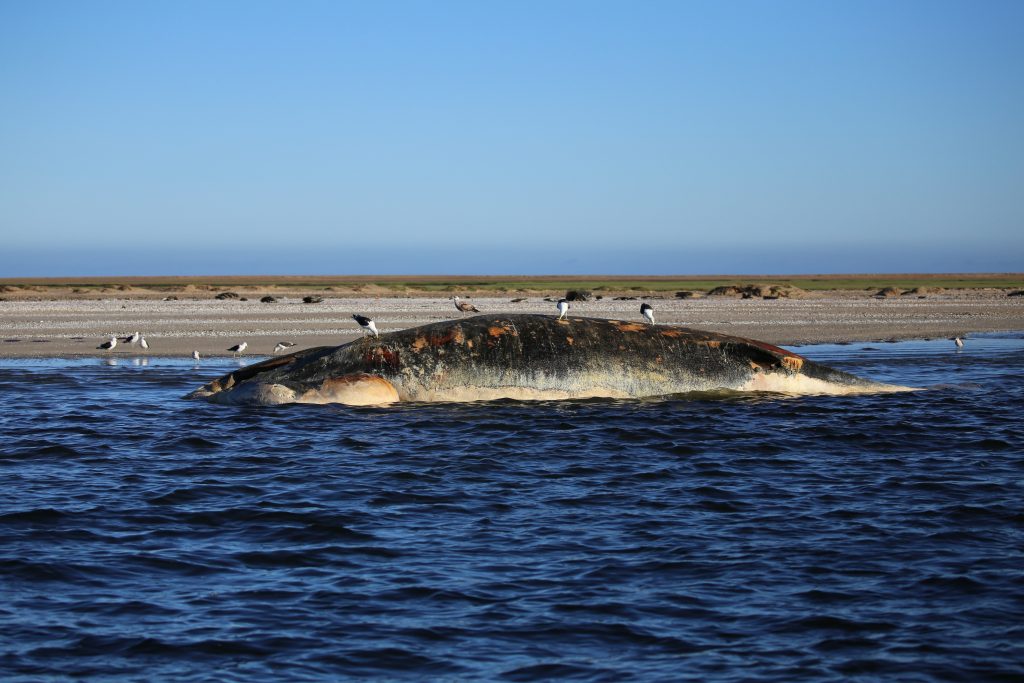
    After all the learning and experiences of the first week, one might expect the following week to be tamer. That was not the case, and the adventures kept piling up. On my eighth day, we found two stranded humpback whales along the coast as we were out at sea. One of them had been reported and the other we stumbled across as we were searching for dolphins. These whales were decomposing and were not pretty. The smell was potent, and the animals no longer looked majestic, having lost all their form to decay. Part of the work however, is collecting samples and measurements from dead cetaceans, and it is vital work. Such data can provide valuable insight into the feeding habits, movement, health, pollution levels and many other aspects of the animal.

    One of the dead humpback whales. Its grace dissolved by decay, but this type of stranding represents a gold mine of potential information about all the factors surrounding the animal. Photographer: Simon Elwen
    One of the dead humpback whales. Its grace dissolved by decay, but this type of stranding represents a gold mine of potential information about all the factors surrounding the animal. Photographer: Simon Elwen

    Similarly, we responded to a stranding report of a dead pygmy sperm whale (Kogia breviceps) along the northern shore. Unlike their more renowned cousin, the sperm whale (Physeter macrocephalus), pygmy sperm whales are small and largely unknown to humans, living deep in the ocean and staying hidden to avoid predation, making finding one all the more interesting. It was also the second ever recorded pygmy sperm whale found in Namibia. This individual was a calf and thus posed little problem in the way of transport. We drove it to a nearby hospital where it most probably became Namibia’s first whale to get a CT scan. The results indicated that the cetacean may have died of Brucellosis, a zoonosis that can affect the brain of the animal.

    The CT scan results of the pygmy sperm whale.
    The CT scan results of the pygmy sperm whale.

    A few days later, we performed a necropsy of the animal in a lab to take samples and get an in-depth understanding of the condition the mammal was in. The necropsy was a bloody affair and the whale no longer resembled a living organism by the end of it, something I was not used to, and something a lot of people would find difficult to digest. I managed to open the skull and the team hypothesised that the CT scan results were correct, as the brain seemed liquified. It was fascinating to learn about the diet and health of such an animal by the contents of its stomach, quality of the lungs and kidneys etc., but it is not for everyone. It is a stark contrast to what many learning conservationists initially think of the work. It is not hugging seal pups, it is dirty and morbid at times, and something to think about when deciding whether it is right for you. But if one can overcome the presence of death and decay, seeing the bigger picture yields many rewards. For instance, should this cetacean have died of Brucellosis, it could have an impact on the health and population of not only pygmy sperm whales, but all other marine mammals in the area as well, and it is important to understand and detect these events.

    Performing a necropsy on the pygmy sperm whale.
    Performing a necropsy on the pygmy sperm whale.

    It was not all blood and guts this week. I was placed on a boat tour to collect data about where tour boats travel to around the bay and the encounters they might have etc. These types of survey are called opportunistic surveys, as I collect data depending on what I encounter on the boat, without a plan of where I am going and what I am going to observe. It was a relaxed environment to work in and I was treated to some oysters along the way, which made me feel like a very privileged intern. These opportunistic sightings are valuable for recognising patterns of human interaction and cetacean reaction. The headline of the tour was encountering a leucistic Heaviside’s dolphin that had not been seen by the NDP in two years. Leucism is the partial loss of pigmentation which results in white, pale or patchy coloration of an animal – not to be mistaken with albinism, which is the complete loss of melanin resulting in a completely white animal, including loss of colouration in the eyes.

    The Leucistic Heaviside's dolphin. Its front completely white and its rear a faded grey. 
Photographer: Jaz Henry
    The Leucistic Heaviside's dolphin. Its front completely white and its rear a faded grey. Photographer: Jaz Henry

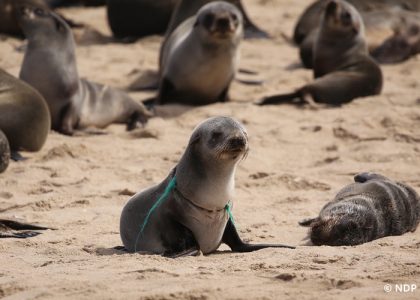
    The problem of the week was entanglement. One day when the weather did not permit us to go out to sea, we did a land survey of jackals and Cape fur seals instead. What we were mainly looking for amongst the huge colonies of seals that cake the beaches around Walvis Bay, is entanglement. The first seal we passed in the car, lay aside from any colony and lifted its head to reveal scarring and a fishing line caught around its neck. We saw multiple such cases. Walvis Bay is a fishing port and there are oyster and mussel farms in the area, which employ nets to cultivate the relevant crustaceans. As in any area where human meets sea, there is bound to be something that a marine mammal can get caught or entangled in. I do not know if these seals could feel what was wrapped around them, but it looked excruciating to the naked eye.

    An entangled Cape fur seal.
Photographer: Monique Laubscher
    An entangled Cape fur seal. Photographer: Monique Laubscher
    20180812_6D_IMG_0030_WVB Pelican Point survey (MLaubscher) (2)
    20180812_6D_IMG_0029_WVB Pelican Point survey (MLaubscher) (2)

    Simon explained that to free all these seals is a full-time job, and not one the Namibian Dolphin Project has the resources to cater to, seals not being their focus after all. They do however work closely with a few benevolent local kayak guides, who have taken it upon themselves to free any entangled seals they may find. Freeing them from their rope or fishing line prison is hard work; the bulls can weigh up to 200 kilograms and could easily take off a finger if approached incorrectly.

    The unfortunate truth I learned this week about marine conservation is that to understand and protect the living, you must learn from the dead. It’s not all sunshine and rainbows and when you are prying through an animal’s organs you do have to stop and remind yourself what you are doing it for. It might seem like it is all life and beauty on Blue Planet, but someone along the line had to be knee deep in a carcass to bring you the wise words of David Attenborough.

    Link to week 1, week 3, and week 4 articles.

    References

    Cfsph.iastate.edu. (2018). [online] Available at:http://www.cfsph.iastate.edu/Factsheets/pdfs/brucellosis_marine.pdf

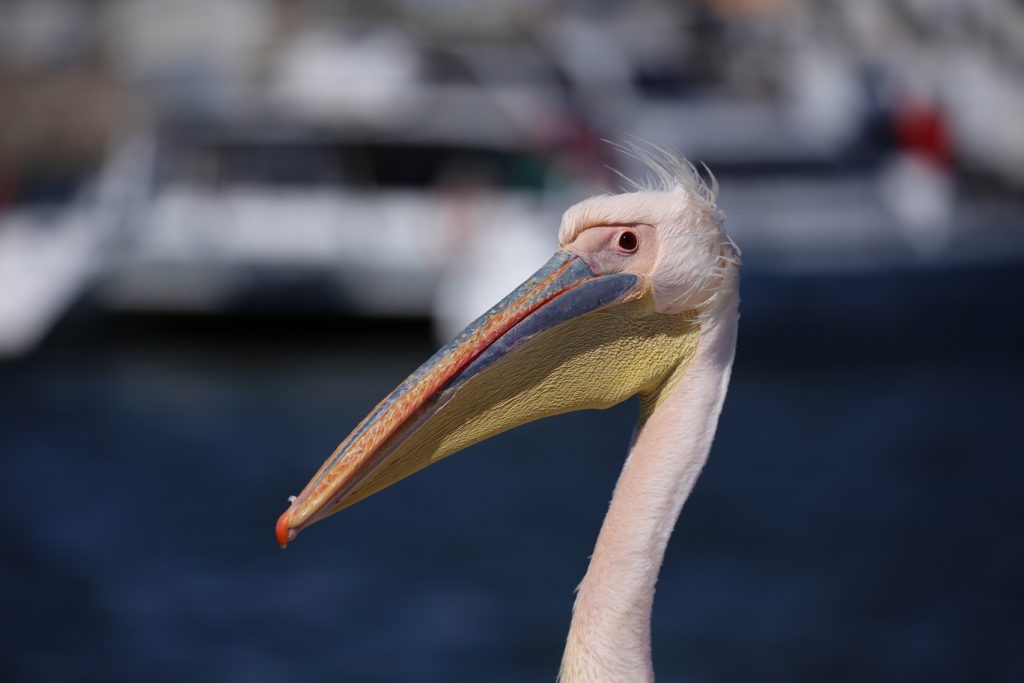
    • Curious pelican. 
Photographer: Jaz Henry
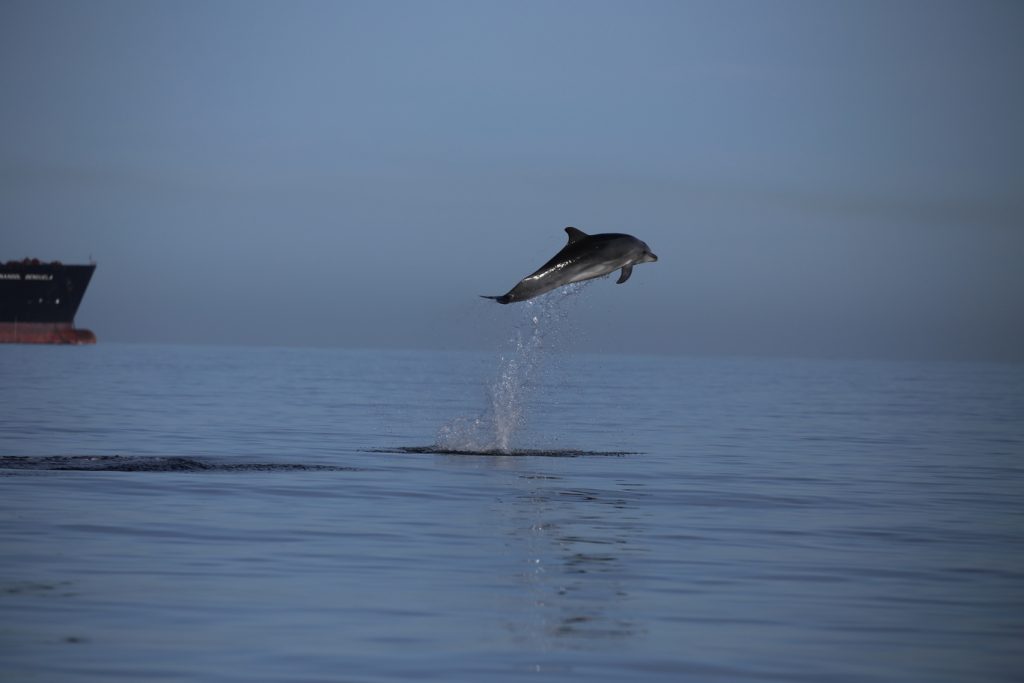
    • A bottlenose dolphin leaping. Photographer: Simon Elwen.
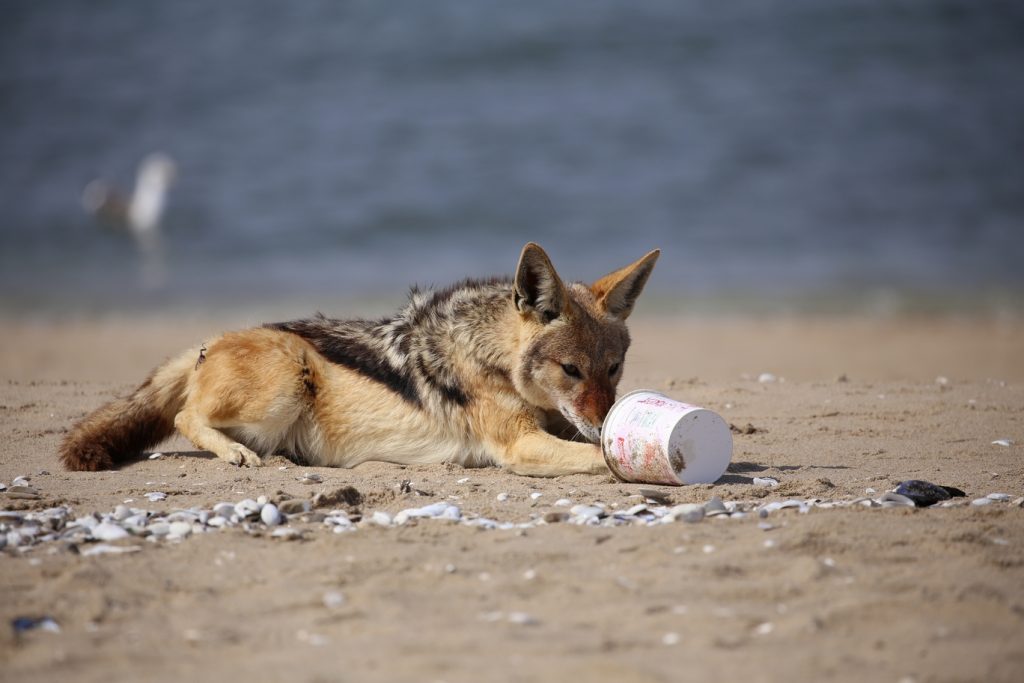
    • A jackal eating out of a yoghurt tub, a reminder of human impact. Photographer: Monique Laubscher
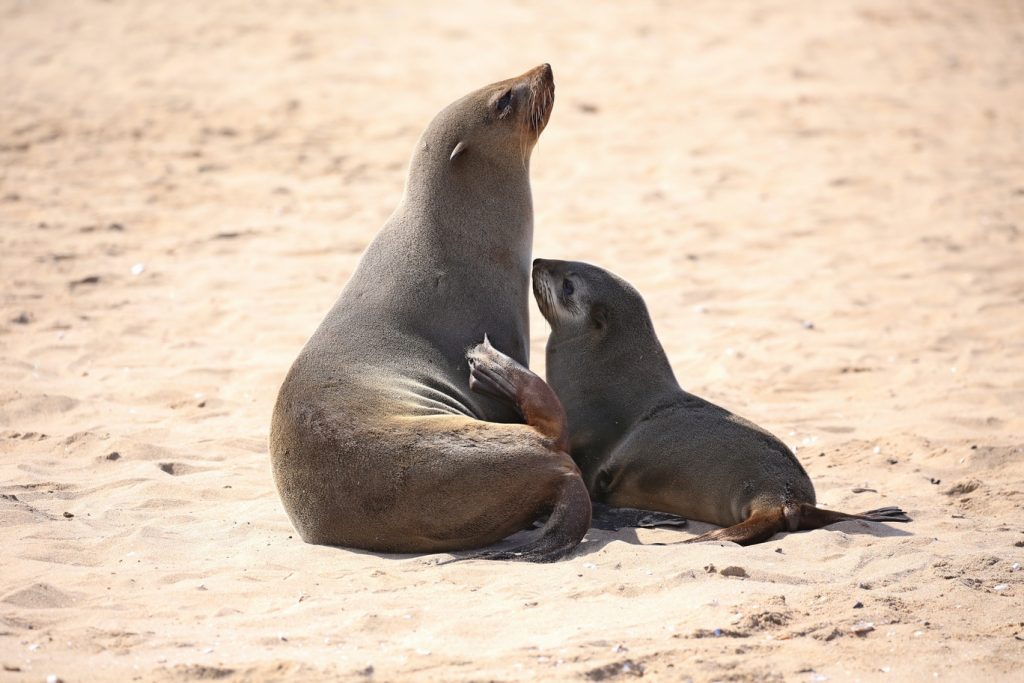
    • Cape fur seal calf hugs its mother.
Photographer: Monique Laubscher
    NamibianDolphinProject Logo_W&B

    You can find more information on the research, conservation and outreach projects of the Namibian Dolphin Project on their website. Here you can also check for upcoming internship opportunities if you want to experience Namibian conservation work firsthand.

  • NamibiaDolphinProject
    05October

    A Humanities Student in a World of Science – Learning

    Article written by Jaz Henry. He studies English Literature and Philosophy and always thought the world of marine conservation was slightly out of his grasp, not having studied Biology or Zoology. So, this summer, he decided to let experience decide whether pursuing this line of work is the right choice for him. After applying to various projects, he was accepted as an intern for the Namibian Dolphin Project. This is a series of articles recounting his weekly experiences as a humanities student in a world of science and conservation.

    I arrived in Namibia and was already captivated by the barren beauty of the vast desert dunes that surrounded me at the airport. It is certainly not a place where you expect to find the sea. However, my home for the duration of my internship was located directly by the coast and the ocean was very much alive. Namibia is one of the only places in the world where you can witness the desert meeting the sea and it provided me with an endless sense of awe throughout my stay.

    The desert meets the sea, a rare and wonderful sight. Photographer: Jaz Henry
    The desert meets the sea, a rare and wonderful sight. Photographer: Jaz Henry

    The team I worked with during the first week were Monique Laubscher, Darren Du Plessis and Simon Elwen, the founder of the Namibian Dolphin Project (NDP). The project began in 2008 and its aims are to collect and analyse data on cetaceans in Walvis Bay, to raise awareness and understanding of these marine mammals and to work towards the conservation of the local populations. Their focus is on the population of bottlenose dolphins (Tursiops truncatus) in the area, but other common species observed are Heaviside’s dolphins (Cephalorhynchus heavisidii) and humpback whales (Megaptera novaeangliae). Besides research, they act as a response team for any sea related animal issues such as strandings or injured penguins. Moreover, they are a primary information point for tourists and locals.

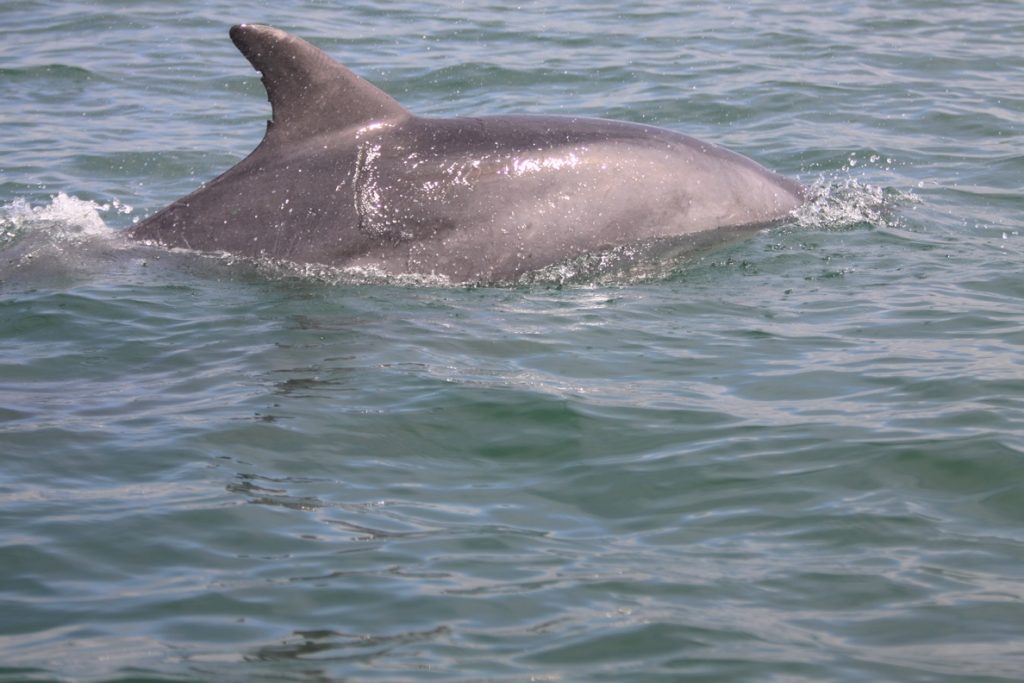
    My first days on the project were loaded with new experiences and learning possibilities. On my debut sea day, I encountered bottlenose dolphins, Heaviside’s dolphins, Cape fur seals (Arctocephalus pusillus), pelicans and flamingos, all for the first time. Bottlenose dolphins are relatively large, and I was surprised by their impressive size. They are beautiful animals and as they leaped into the air and socialised with each other, I felt increasingly fond of them. Heaviside’s dolphins are much smaller and evasive. That said, they were equally endearing as they raced back and forth under the boat and teased us as we tried to take photographs of them for photo identification. You can tell the difference between the two species at a glance by their differently shaped dorsal fins: bottlenose dolphins have a curved fin like a hipster’s beanie hat, whereas Heaviside’s display a triangular fin.

    Triangular fin of the Heaviside's dolphin. 
Photographer: Jaz Henry
    Triangular fin of the Heaviside's dolphin. Photographer: Jaz Henry
    Two Heaviside's dolphins. Photographer: Simon Elwen
    Two Heaviside's dolphins. Photographer: Simon Elwen
    Curved fin of the bottlenose dolphin. Photographer: Simon Elwen
    Curved fin of the bottlenose dolphin. Photographer: Simon Elwen

    The second time I went to sea, we encountered a humpback whale and her calf. They are massive mammals and seeing them in the wild made everything else seem small. Tracking these gigantic creatures was humbling and served to further deepen my respect of the ocean; a respect that grew exponentially every day I spent on the project.

    The humpback whale we tracked. They can weigh around 30 tons. 
Photographer: Jaz Henry
    The humpback whale we tracked. They can weigh around 30 tons. Photographer: Jaz Henry

    That same evening, as we settled down in a restaurant to drink a beer and relax, we were called out for two penguins that had been sighted in bad health nearby. As the main response team, we left our drinks behind to go investigate the scene. We found the penguins drooped on the ground close to where they had left the sea and covered in oil. Monique and I gathered them up with blankets and they were driven off to a vet. Whilst an exciting experience in terms of being involved in hands on conservation work, it was upsetting to see animals suffering at the whim of human greed.

    The afternoons and evenings were spent analysing and transcribing data. Not being a scientist, this was initially the element that I felt would weigh on me. It is hard work, and it can feel daunting to undergo the monotonous  task of inputting all your findings and observations of the day into a computer, but as with the dead humpback whales, it is what that data is used for that is gratifying: compiling data to identify trends and patterns that can, over the years, serve as formal evidence in persuading governments and organisations of the hazards and potential improvements facing local cetaceans. But again, it is important to consider this element of office work that comes with the territory that a lot of young people believe is bypassed by choosing a career in conservation.

    This week’s main problem was tourism. The tour boats crowd around small pods of dolphins and the noise levels are extremely high. I saw twelve tour boats racing to catch a glimpse of only two dolphins, which must have been distressing for the animals. A survey done by the Namibian Dolphin Project found that once more than four boats are in proximity of bottlenose dolphins, it would seem that the animals no longer rest or feed (Gridley et al., 2016). The tourism industry is thriving here because of the incredible amount of wildlife, which certainly has its effect on the animals living here as their wildness is prostituted to tourists by the tour companies. Tour boats host trained Cape fur seals and pelicans for tourists to pet, which they have made dependent by feeding them. The Namibian Dolphin Project’s response to this issue is to raise awareness about the local population of marine mammals and outreach to the local community to create a better understanding of what constitutes harmful behaviour or harassment to the animals. I saw this involvement first hand, as Simon makes a conscious effort of knowing everyone in the community and providing an open door for discussion, which allows understanding to flow both ways, usually resulting in a mutual agreement and common aim.

    Tourists crowd to see the cetaceans.
Photographer: Jaz Henry.
    Tourists crowd to see the cetaceans. Photographer: Jaz Henry.

    My main takeaway as a humanities student amongst scientists this week was a more rounded way of thinking about conservation. I saw a combination of the good, the bad and the ugly. I realised that conservation is not necessarily the constant hands-on work with animals that people think of. This work, as was the case with the Penguins, is present, but it is only a snippet of the whole story. The conservation that can have a tremendous impact takes time and patience. It takes years of research, data input and analysis before it can be formalised into a published paper that can serve as evidence in governmental and corporate discussion. One may not be able initially to see this change because it lies so far in the future, but I keep it at the back of my mind after this week on the project, as I transcribe another page of data onto a computer.

    Link to week 2, week 3, and week 4 articles.

    References

    Gridley, T., Elwen, S., Rashley, G., Krakauer, A. and Heiler, J. (2016). Bottlenose dolphins change their whistling characteristics in relation to vessel presence, surface behavior and group composition. In: Fourth International Conference on the Effects of Noise on Aquatic Life. Acoustical Society of America. Link to full text.

    • The best office in the world featuring Simon Elwen. 
Photographer: Jaz Henry
    • A humpback whale fluke.
Photographer: Jaz Henry
    • Simon prepping a hydrophone.
Photographer: Monique Laubscher
    • Me on Nannuq, our vessel. 
Photographer: Monique Laubscher
    • A seagull in transit.
Photographer: Simon Elwen
    • Two pelicans relaxing. 
Photographer: Simon Elwen
    NamibianDolphinProject Logo_W&B

    You can find more information on the research, conservation and outreach projects of the Namibian Dolphin Project on their website. Here you can also check for upcoming internship opportunities if you want to experience Namibian conservation work firsthand.

  • Elkhorn coral
    01April

    Corals – The oases of the oceans are turning to sand

    Article written by marine biologist, Henrique Bravo Gouveia. He is the co-founder of the conservation NGO, Lonely Creatures, which aims to raise awareness about endangered species across the globe. Here is an account taken from his expedition from Argentina to Alaska in the search of endangered species. 

    Reefs, the marine equivalent of tropical rainforests, are one of the most diverse ecosystems on the planet. They are true oases in the vastness of the oceans. Fish, but also nudibranchs, sharks, turtles, sponges, lobsters, algae, sea stars or anemones are some of the species seeking refuge in reefs. They are also one of the most threatened ecosystems. Putting it simply, with the disappearance of coral reefs about 25% of marine species we know could vanish alongside since they wouldn’t stand a chance of survival outside them.

    Humans also stand to lose plenty with the loss of this incredible ecosystem. Over 450 million people live in the vicinity of coral reefs, with many depending directly on the services provided by corals for sustenance and even survival, be it through the fish they provide, the actual coral material that is used for a myriad of things, the tourism it attracts, but also the protection they provide to coastlines. Corals are a first defense against storms, tsunamis or hurricanes, so their disappearance could have catastrophic consequences, mainly in regions that depend a lot on them, such as tropical islands.

    In the crystal blue waters of the Caribbean there are about 100 different species of corals and roughly 500-700 reef-associated fish species. The famous French naturalist Lamarck (1744-1829) was responsible for the identification of many of these corals, probably sitting in a comfortable chair in Paris whilst his disciples had the pleasure of seeing some of these during the 19th century, most likely for the first time. They collected everything they came across and took pieces of all kinds of corals to later have them examined by the master. Two of those species that Lamarck first described in 1816 are now at the risk of extinction, leaving only the pickled museum specimens as proof of their existence. These elkhorn and staghorn corals are intricate and complicated looking specimens of the Acropora family, resembling elk and stag horns as their names suggest. Over the last 40 years more than 80% of the populations of both species disappeared, awarding them the title of critically endangered. These were the two species I was on the lookout for in Panama.

    Beautiful coastline of Isla Escudo Veraguas
    Guide canoes through mangroves
    An immense elkhorn coral reef hiding under the surface

    Isla Escudo Veraguas is an island inhabited by 120 fishermen, and their families, and of slightly difficult access for most tourists passing through the country. It has however pristine reefs, or that’s what I was told. It takes 2 hours each way on a speedboat, making for a bumpy ride, but the destination is definitely worth it. Taken out of a postcard, the colours of the water and sand were a bliss. Palm trees and mangroves everywhere one looks, the only thing missing to complete the picture were the corals.

    It took me a while to process what I was seeing once I dipped my face in the water. Everywhere I looked there were elkhorn corals, everywhere! They came in all sizes, from a few centimetres to a couple of metres from ‘root’ to the tip of the branches. With their dark yellow colour and their incredible shapes, it was hard to look away. They even made you forget you were underwater and that some breaths were necessary from time to time. It was indeed an oasis, with fish swimming in all directions forming a rainbow of colours in those busy coral highways.

    Looking at that incredible abundance of corals, it was hard to imagine they were on the verge of extinction. In sessile species, there can be a high level of abundance in specific areas if the conditions are right and if the threats are little, which happened to be the case. This also means that the conservation of these species is slightly easier compared to highly mobile ones. Preserving the area where the species lives, and its surroundings, can be achieved by setting up marine protected areas and is one of the most successful actions towards the preservation of species. Corals, however, face some additional challenges that we might not be able to solve in time to save them. Rising sea temperatures and ocean acidification are seriously threatening their survival. This is not so much a problem for the corals themselves, but for their algae symbionts (zooxanthellae), which don’t particularly enjoy waters that are too warm. Zooxanthellae form a symbiosis with corals by providing them with up to 90% of the energy they require and are also the ones responsible for the many colours we see in corals. When a certain temperature is reached, which varies from species to species, they detach themselves from the coral, and the coral undergoes a dying process called bleaching, which is what is happening in corals all over the globe (the latest survey at the Great Barrier Reef revealed that over 90% of corals showed signs of bleaching). When they die, the corals start disintegrating, eventually turning to sand.

    Snorkeling over elkhorn reef
    Snorkeling over elkhorn reef

    They are also threatened by human activities like intensive fishing, trawling or high levels of tourism. They are in dire straits, and according to experts, it is likely that corals will disappear altogether within the course of this century. 90% of corals are estimated to vanish by 2050, so now is a good time to go see them and show them to your children.

    I also spotted some staghorn corals while in Panama, albeit with more difficulty and in numbers that did not come close to those of elkhorn. Hiding in crevasses of rocks, or at depths that required scuba diving, and with sizes never exceeding 20-30 centimetres, they weren’t as memorable as their relatives, but still beautiful nonetheless and with more apparent delicate structures. Sadly, the majority of the ones I saw were in the process of bleaching. I’m sure there must be some spots where staghorn corals are still thriving and look as impressive as elkhorn did for me off the coast of Escudo Veraguas, I just didn’t get to see them.

    Lamarck was one of the founders of the theories of evolution. It’s sad to think that the species he described for Science could soon disappear and might not play a role in the evolution of other species in the future.

    Like all species that are facing extinction, things can look bleak and depressing, but there are almost always researchers and conservationists working towards their preservation, and corals are no exception. I have no doubt that the incredible level of species diversity we have now will take a toll, but corals might have a fighting chance if scientists, governments, and the general public work together to minimise the effects of climate change and grant coral reefs the protection they deserve.

    Staghorn
    Henrique inspecting the staghorn coral
    Elkhorn coral reef

    More information about Lonely Creatures and Henrique’s expedition can be found here and here.

    This article was originally published on Wilder.pt. Photos taken by Anna Schleimer and Henrique Bravo Gouveia.

  • VaquitaCPR
    06January

    Why there is still hope for the Vaquita

    Update written by Mel Cosentino.

    Many things happened since July. The Vaquita CPR (Consortium for Vaquita Conservation, Protection and Recovery) went live in mid-October with the mission to capture and re-locate vaquitas to a temporary sanctuary. The emergency action plan was led by the Mexican government and supported by a consortium of marine mammal experts from over a dozen organizations worldwide.  It was a desperate measure to a desperate situation. There are fewer than 30 vaquitas left.

    On the 20th of October, the team announced they successfully located and rescued the first vaquita, a small calf. The little vaquita had to be released after showing signs of stress. But there was hope. The dolphins were able to locate vaquitas and the team of the top experts in their field were able to capture them for relocation. Just two weeks later, on the 5th of November a new announcement was made. The second vaquita they rescued had died. This time an adult female.

    The team was devastated, and the world started to feel their pain. The pain of losing an entire species. The Vaquita CPR was cancelled. For the first time, vaquitas made the international news and were all over social media. However, the 65 experts from 9 countries did not receive the support one would expect. Nor the vaquitas, not yet.

    Scientists have been asking for help for decades. They have been ignored for decades. The main threat to vaquita survival is being accidentally trapped in gillnets, especially those (illegally) targeting totoabas. Totoabas are a delicacy that reach enormous prices in black markets in Asia. In an attempt to attack the problem at its base, a gillnet ban was introduced in 2015 and made permanent in June 2017. But legislations are no game changer. Compliance and enforcement remain low. All there is left now is public pressure.

    If we want the vaquita to survive, efforts must multiply now.

    And you can help.

    https://www.vaquitacpr.org/latest-news/

    VaquitaCPR Field Operations

  • Humpback whale breach
    10August

    Whale Research and Conservation in the St Lawrence

    Text written by Félix Feider, 22-year-old final year undergrad studying Marine Sciences at the National University of Ireland, Galway. He participated in a 2-week research programme at the Mingan Islands Cetacean Study in Longue-Pointe-de-Mingan, Québec, Canada.

    My whale research adventure in Canada started in late July. I boarded a Dash from Montreal to Sept-Iles, said goodbye to the big city life and hello to the Canadian wilderness. After a 2-hour drive, I arrived in small, but charming, Longue-Pointe-de-Mingan on the North Shore. It was immediately clear that this region is a hidden gem, with little tourists coming here and a lot of people never even having heard of it (including me until a few months ago). On the north side of the town is vast, seemingly endless dense forest and on the south side is the Mingan Islands Archipelago and the St. Lawrence, sprawling with life. The weather in this region is very volatile, with cloudless skies suddenly turning stormy and rainy. Only good weather conditions allowed us to go out on sea to look for whales. On a good day we would get up at 6am and prepare the 2 inflatable boats to be ready to leave Mingan at 7:30. The archipelago itself hosts a range of smaller marine mammals, such as seals, porpoises and even minke whales. However, the main focus of the research station lies on blue whales, fin whales and humpback whales in the St. Lawrence, which use the highly productive waters closer to Anticosti Island in the south as feeding grounds. After a 1.5-hour drive, the first whales could be spotted. The very first whale that I saw was a right whale, which are relatively new to this area and have encountered hazardous events here in the last weeks, with close to two percent (10 individuals) of the North Atlantic population (estimated to be slightly higher than 500 individuals) having died due to anthropogenic reasons, such as ship collisions and fishing gear entanglements. The North Atlantic right whale is listed as critically endangered, meaning that the species is at risk of going extinct if more animals keep dying than entering the population.

    • Critically endangered right whale
    • Harbour porpoises are the smallest cetaceans in the St Lawrence.
    • Right whale in the St Lawrence
    • Félix on the North Shore

    The research station mainly uses two means of monitoring the cetacean populations. The first and most abundantly used method is photo identification (photo-ID), where pictures are taken of the whale’s unique ¨fingerprint¨ to allow identification. This fingerprint refers to a body part of the whale that has a shape and/or pigmentation pattern unique to each individual and that can be used to identify individual whales just using a few pictures. The defining features used for photo-ID changes from species to species. The humpback whale is the easiest to identify: a picture from the right and left side of the dorsal fin and the ventral side of the fluke show highly distinctive shapes and pigmentation patterns. Fin whale identification is based on pictures of the right side dorsal fin and the area behind the blowholes, which hosts what is called the blaze and chevron, pigmentation patterns that are unique to an individual, but much more complicated to differentiate to an untrained eye such as mine. The blue whale was once abundant in this region, but since the early 1990s their numbers in this region have shriveled and only a handful of individuals are nowadays seen here every season. Sadly I did not have the chance to see one myself. Photos are also used to investigate how many animals have been entangled in fishing gear, particularly by examining the number of animals with scars around their peduncle, which is the area where the tailstock meets the fluke.

    • The ventral side of the fluke of humpback whales is used to differentiate among individuals
    • The chevron is used for photo-identification in fin whales
    • The blow of fin whales can be spotted from a great distance. MICS Photo
    • Humpback whale cow and calf

    The second most used method of monitoring the populations is biopsy sampling. An arrow with a 3 cm long hollow metal tube as tip is placed at the region below the dorsal fin, at a perpendicular angle, using a crossbow. The tip only pierces the skin and the top layer of the fat layer, or blubber, which probably feels like a small mosquito bite to the whale. The skin and blubber are later separated in the lab and used for different analyses. The skin is used to extract the DNA, which is in turn used to genetically determine the sex of the individual and to learn more about the population structure and gene pool by defining relationships among individuals. The blubber is used for studies on toxicity load, hormones and pregnancy rates. All these data sets become even more valuable over long term study and since the station is now operating for 38 years, the amount of data collected to date is huge and has already helped us understand a lot about migration, behaviour, life cycle, sexual maturity and much more. Whenever the opportunity arises, researchers also collect fecal (poo!) samples which hold valuable information on the diet and body condition of the animals. That way we can learn what the whales feed on and how healthy they are.

    On top of the two above stated methods, the station also uses several tagging methods to monitor the behaviour of the animals underwater. It is important to remember that most of the research here focuses on the brief moments that whales spend on the sea surface, however our knowledge about their behaviour below the surface is very limited at best. Tagging can tell us about the depths they travel to, their feeding behaviours, their diving patterns, migration pathways, important feeding grounds and much more. The problem about tags are numerous though; they are quite expensive (some cost 25.000$), it is difficult and time consuming to place them, they can sometimes hold for just a few minutes and rarely longer than a month and new studies show that the whales’ behaviour is influenced by the tags and therefore the data could be misleading. Despite these problems, certain individual cases in which the tags have stayed put over a long period of time have shed light on some of the many question that are still unanswered. For instance two tagged blue whales have been monitored to stop north of the New England Seamounts to feed over a few days before continuing their migration, the assumed importance of this region to this species was previously not known.

    • Researchers use the blow (here of fin whales) to spot the animals from the distance
    • Breach of a humpback whale, always a spectacular sight
    • Before the humpback whale dives, it lifts the fluke high out of the water.
    • Fin whale cow and calf in the St Lawrence

    After a long day at sea, having seen and photographed a lot of whales and sampled a few biopsies if possible, we returned to the pier in Mingan. Dinner was always provided at the only restaurant in Longue-Pointe, Le Macareux Dodu, and breakfast at La Chicoutée, both of which had amazing food and the service was always extremely friendly. Everybody whom I’ve met in town was extremely welcoming and it was very interesting to get to know their stories and way of life. On rainy, foggy or windy days we could not go out to sea. Instead I visited the station’s museum, I got presentations about the history of the station, their work, future plans, I went to an Innu Cultural Centre or simply helped at the station, identifying and matching whales that were photographed on previous days or helped wherever else I could. One of the best parts of my experience here was the team. It was an international melting pot of scientists from all around the world, with different backgrounds and each and every one was very welcoming, friendly and helpful. I got to know a lot of amazing, fascinating characters that became friends and who I am hoping to meet again sometime in the future.

    To conclude, the 2 weeks that I spent at the Mingan Islands Cetacean Study were fascinating. I learned a lot about marine mammology that I am looking forward to implementing into my future academic career choices. I got spoilt with the diversity and amount of marine life on the St. Lawrence, having sighted numerous fin, humpback, minke and right whales, porpoises, seals and even a few basking sharks, on a good day I saw more than 20 whales. Since my major interest is in marine conservation, I now know the hard work that is required to gather population data for conservation efforts to be possible. My days at the station and time outside working hours were very informative and interesting as well. Long story short, I had an absolutely great time. Since there are still more questions than answers regarding cetaceans and every answer reveals new questions, their work here is far from done and there are many future research opportunities still available. I highly recommend this experience to anybody who wants to know more about whales, cetacean study, the methods of research and the life at a remote research station, I can promise you that you will not regret coming here.

    • Beautiful rock formations on the North Shore
    • On windy days there was time to explore the North Shore
    • Félix scanning the horizon for whales
    • The North Shore
  • vaquita_alive
    08July

    Heroes in the Making – Saving the Vaquita

    Article written by Mel Cosentino following an interview with Lorenzo Rojas Bracho. Mel has been involved in cetacean research since 2006. She is currently doing her PhD at the University of Strathclyde, Glasgow and is collaborating with Odyssea.

    The vaquita is the world’s smallest cetacean species, reaching only 1.5m in length and 43 kg in weight. Endemic to the upper Gulf of California (Mexico), it has a highly restricted distribution range. So shy and difficult to see, the vaquita was first described in 1958. Just 20 years later it was included as Vulnerable in the IUCN red list, as was then upgraded to Endangered in 1990. Since 1996 it is considered Critically Endangered, meaning it faces high risk of extinction. It is now the most endangered marine mammal.

    Their main threat is entanglement in gillnets targeting totoabas, a marine fish that is also endemic to the Gulf of California and endangered. Totoaba can reach up to 2m in length (larger than the vaquita!), and are illegally caught for their swim bladders. In April 2015, a gillnet ban was introduced for a two-year period to protect both the vaquitas and the totoabas, with associated economic compensation for fishermen costing US$37 million a year. However, the two years have passed and the situation for the vaquita has not improved.

    Lorenzo Rojas Bracho is the Coordinator of Research and Conservation of Marine Mammals at the National Institute of Ecology and Climate Change in Mexico. Their work includes evaluating risk factors for the vaquita through the International Committee for the Recovery of the Vaquita (CIRVA). The Mexican Ministry of Environment, Natural Resources and Fisheries created CIRVA in 1996 to develop a recovery plan for the vaquita based on the best scientific evidence.

    What is the biggest threat for the survival of vaquitas?

    “A paper published in the 1980’s that listed potential risk factors for the vaquita included the reduction of flow from the Colorado River due to the constructions of dams, which runs from the US into the upper Gulf of California. The reduced flow would modify the ecosystem due to insufficient input of nutrients. However, no subsequent research supports this as an important risk factor for the vaquita, and yet it continues to be cited by the Fisheries sector, including the Federal authorities, and some researchers.

    Fishermen can make between US$5000 to US$8500, and even US$10000 per kg of good quality totoaba swim bladder.

    It is very attractive to blame the US, so the Fisheries authorities can ‘wash their hands’. But the main threat for vaquitas is (and has been for the past years) the illegal totoaba fishery. Their swim bladder “reaches exorbitant prices in the Chinese market. Fishermen can make between US$5000 to US$8500, and even US$10000 per kg of good quality swim bladder.

    The new invention from the Fisheries authorities, is that white sharks are predating the population. There is no evidence for it either. It is fisheries, fisheries, and fisheries, that’s it.”

    vaquitamarina

    How is the situation with the fishermen?

    “The relationship between the authorities and the fishing communities is pretty bad. Particularly with the National Fisheries Institute. It is very aggressive.

    It may sound ‘imperialist’, but if you think about it from the US fishermen point of view, they want to compete in equal conditions.

    With an international call to boycott Mexican marine products that are associated with the death of vaquitas, the whole fishery industry may be shut down. The boycott is “not because the US government asks for it, but because the legislation in the US forbids importing fishing products from other countries that do not follow the same conservation measures for marine mammals than in the US. It may sound ‘imperialist’, but if you think about it from the US fishermen point of view, they want to compete in equal conditions. If they must implement restrictive measures not to harm marine mammals and sea turtles, then competitors from other countries should apply the same measures.

    “Fishermen are angry. They have threatened me and others. But they have a point. The fishing industry is going to close, how are they going to eat? There might be no economic compensations, there are no alternative fishing gear.

    The Fisheries authorities have put us in a very uncomfortable situation, in which it seems we are trying to save the vaquita and extinguish fishermen. But all recommendations we have made since 1997, when we started, have been to develop alternative fishing gear, which they have not been able to do yet.”

    … it seems we are trying to save the vaquita and extinguish fishermen. But all recommendations we have made since 1997, when we started, have been to develop alternative fishing gear…

    Are fishermen collaborating to save the vaquita?

    “We have been working with fishermen for about 20 years and we have a group of 30 fishermen, out of 800, working with us. So, it really is a small group, and they are constantly assaulted by other fishermen. For example, trying to burn the van of a fishermen that developed an alternative gear. Some ‘bucheros’ (those who illegally fish totoaba for their swim bladder – ‘buche’ in Spanish) control small towns, they are like a mafia, and carry guns. Maybe they are a minority but they have the power to incite others toward violent actions.

    Not all fishermen are interested in saving the vaquita, and I don’t know if they oppose its conservation, but the circumstances are being badly handled by the authorities and are leading to a situation where everyone is against the vaquita. I think the majority of fishermen want everything to be over. It is not true either that all fishermen are bad. There are good and bad ones, just like in any other walks of life.

    If there were alternative fishing gear, fishermen could go out and do what they do best, which is fishing, and they would have something to feed their families, things would be very different.”

    Did the economic compensation help the situation?

    “The government, out of respect, gave the funds to the fishing cooperatives leaders, because they know who everyone is. But in Mexico we are not Scandinavians to behave well with things like this. These leaders kept money for themselves. I mean, they added their relatives to the programme. We know for example of nieces and nephews who received funds but are not in the fishing industry, as well as someone’s mother who does not even live in the area. That bad distribution of the resources due to the corruption of the leaders (and I don’t mean all of them, but some), left some fishermen out. Their own leaders punished them. So, what could they do? Some came to work with us (because we pay them) but others went to illegal totoaba fishing.

    When the government realised what was happening they took the funds and gave them to the National Commission of Natural Protected Areas which improved the situation.”

    The Mexican Government has just announced a permanent ban for commercial gillnets in a designated area within the Gulf of California, except to catch curvina. The ban includes prohibition to transport the nets through the area, as well as on land and air between nearby fishing communities. Additionally, all fishing activities carried out from small vessels are forbidden between 9 pm and 5 am.

    “But what is missing is to not only ban the use, but the possession of the nets, because people have them in their houses, and the temptation to go fishing is high.”

    It is still unclear, though, if fishermen will continue to receive compensation while (if) alternative gears are being developed.

    How is the Government seeking to enforce compliance?

    For those fishermen holding permits to fish in the designated area, the new legislation requires them to report to the relevant authorities within 24 hours when nets are lost, and to participate in their recovery. Additionally, vessels are require to carry a tracking system for monitoring purposes.

    “For the legal fishing of curvina, which is also being exported to Asia for their swim bladder (although at much lower prices), the Vessel Monitoring Systems system makes it possible to locate where curvina fishermen are, and detect if any fishing vessel is in a different area, which could indicate they are catching totoaba.”

    How bad is the situation of the vaquita?

    “We have followed the long-term trend of the population for 20 years now, and after the expedition Vaquita 2015, using a combination of acoustic and visual methods, we estimated the population to be of fewer than 60 animals. By November 2016 the data indicated that the population had basically decreased a 50%, meaning than more or less 30 animals were left.” The current population size is unknown; the new monitoring season already started and will last until August or September. But the situation does not look good and it is likely that the population have further decreased since then. They already recovered at least 5 dead vaquitas, “3 definitely caught in fishing nets. Of the other 2, one was a foetus, so maybe the mother had a miscarriage and she died too (or maybe not). We also have a report of another animal, that may have died in December or January. So, the situation is terrible.”

    The significant population decline in recent years had led to consider extreme measures: to capture the vaquitas and put them in a sanctuary, away from the fishing nets that are killing them. Just like in a Sci-Fi movie, trained dolphins are going to help save the vaquitas. Yes, you read correctly.

    Can you tell me more about the Vaquita CPR project (VaquitaCPR: Consortium for Vaquita Conservation, Protection and Recovery)?

    Locating the vaquitas is not easy, but even harder is to know where they are to capture them “Since 2015 when we started working on this idea, the problem we could not find a solution for was how to follow the vaquitas to capture them after we have located them visually or acoustically. During a meeting in San Diego, Sam Ridgway, from the National Marine Mammal Foundation, told us to use the dolphins trained by the US navy. Tests have been successfully carried out already, to locate harbour porpoises in the San Francisco bay, under the Golden Gate bridge. So, we are going to bring the dolphins to the upper Gulf of California.”

    The team that will be working to capture vaquitas includes about 40 people from Asia, Europe, and North America (including Mexico). Despite the risks involved in this project, the experts are hopeful. Once the vaquitas are in the sanctuary the key is to use the time “to develop alternative fishing gear, and that there is no need for gillnets anymore. So, then the vaquitas could return to the upper Gulf of California, in a gillnet-free environment.”

    “There is a risk. But at least we have the chance to save them. If we leave them out there they are going to die, no doubt.”

    How can people help the vaquita?

    “I think that one of the things that can be done is to support the CPR project”. Lorenzo recognises the difficulties of the project, and that there are many reasons why it might not work. “But at least we have the chance to save them. If we leave them out there they are going to die, no doubt.”
    “We will have great vets on board. Frances Gulland and Cynthia Smith are involved, both internationally recognised for their work.” There is also a system in place that requires that the first step is successful to move to the second step. For example, “if we find them and capture them, but they are too stressed, the project is over.” But Lorenzo is hopeful, there are examples of small populations that have recovered, such as the Condor in California.” Different animals, of course, but the Condor in California was down to 8 animals and they are recovering.”

    The vaquita CPR is their last chance to survive and we have to support it. “And obviously, we need funds to promote the conservation of vaquita. If we manage to catch the vaquitas, and everything works well, it is important to keep the pressure for the fisheries authorities to develop alternative fishing gears, or to authorise others to do so.

    #ISupportVaquitaCPR.

    For the latest CIRVA report, check the IUCN website.

    Thank you!

    DONATE – http://www.nmmf.org/vaquitacpr.html

    C8loBgHXYAAAgar
  • pierre_work
    08January

    RTL Documentary “Odyssea”

    A small team from the Luxembourgish TV station RTL (Deborah Ceccacci, Sam Bouchon and Marc Aragones) joined Pierre Gallego this summer during his field work in Mozambique, where he studied humpback whales. The result was a great documentary that was aired on TV on 3 January 2017.

    The documentary describes Pierre Gallego’s work and gives an insight into the daily life of a marine biologist during the field season: boat surveys, photo-identification, biopsy collection, interaction with volunteers, acoustics, and much more. When asked about where he sees Odyssea in a couple of years, Pierre replied that he would love to see Odyssea grow more by establishing more collaborations in Luxembourg, helping to secure our ongoing research and conservation projects.

    We hope the documentary made people rethink the apparent incompatibility between “Luxembourg” and “marine biology” and that they will join us on future expeditions.

    You can watch the documentary (only in Luxembourgish) on the RTL website.

    A big thank you to the RTL team for their terrific work!

    Pierre Gallego (left) with RTL team Sam Bouchon (middle) and Deborah Ceccacci (right).
    Pierre Gallego (left) with RTL team Sam Bouchon (middle) and Deborah Ceccacci (right).
  • whaleshark
    19November

    Research Project: Whale Shark Tourism in the Philippines

    Over a period of six months, Odyssea researcher Anna Schleimer joined the Large Marine Vertebrates Project in the Philippines to study the behaviour of the world’s largest fish: the wale shark. The project was located in the small town of Oslob on Cebu, which has become a popular destination for whale shark watchers since an amateur video in 2011 had shown fishermen luring whale sharks away from their fishing nets with food. Along with the growing number of tourists came changes in the local economy as the tourist industry created many new jobs in resorts, restaurants, scuba diving companies and tourist tours. Now many locals rely on whale shark tourism as their primary source of income. When talking to locals, you soon realise how proud the community is about their ‘butanding’, the local term for whale shark, and that they care about their whale sharks.

    However, the whale shark aggregation in Oslob is maintained through provisioning, a highly controversial method where the whale sharks are being fed by humans to create an incentive for the animals to stay in the area. Possible consequences of provisioning include the disruption of natural behaviour, aggressive behaviour towards humans, and increased stress levels. In order to understand how provisioning is affecting the whale sharks of Oslob, researchers and volunteers from the Large Marine Vertebrates Project spent hundreds of hours in water to study and document the behaviour of the provisioned whale sharks in Oslob. By taking pictures of the spot pattern on the sharks (photo-identification), the researchers were able to recognise individual whale sharks and describe changes in their behaviour over time.  The study showed that the sharks had learnt to associate the area with food and that frequently returning sharks had synchronised their arrival to the feeding area with the schedule of the feeding boats, both arriving around 6 am every morning. The researchers also noticed that the whale sharks changed the way they fed over time: while initially the new sharks swam around hectically, with some experience they learnt to approach the boats with the feeders providing little handfuls of shrimp. Experienced sharks were often observed in a stationary vertical position engulfing the food next to the boats. The study also revealed that frequently returning sharks became less skittish over time and reacted progressively less to touches from other sharks and tourists (which were documented despite a no-touch policy).

    In addition to the animal behaviour, researchers also recorded compliance to the code of conduct, particularly whether regulations on the minimum distances between swimmers and whale sharks and the maximum number of people allowed per whale shark were followed. The study clearly showed that overcrowding was the norm and that people were not respecting the minimum distance limits to the sharks. That is why a stricter enforcement of the code of conduct is required in order to prevent potentially negative impacts on the animals.

    While this study clearly showed that provisioning lead to changes in behaviour of the whale sharks, it remains unclear to what extent the observed changes reflected a mere adaptation to increase feeding efficiency or an actual disruption of natural behaviour. Oslob is currently the only place in the Philippines where an artificial whale shark aggregation is maintained through provisioning. Donsol and Southern Leyte are known to have natural seasonal aggregations of whale sharks (no provisioning) and should be considered as an alternative to Oslob.

    The full study can be found here: https://peerj.com/articles/1452.pdf

Page 2 of 2«12
© 2026 ODYSSEA ASBL
  • Home
  • About
  • News
  • Contact