• Sign in

  • Join for free
  • Home
  • News
  • About
    • The ODYSSEA Team
    • Sponsors
    • Collaborators
  • Projects
    • Events
    • Past Projects
    • Research and Conservation
  • Support Us
  • Publications
  • Photos
  • Contact
ODYSSEA

Search

    • en
    • fr
  • info@odyssea.lu
0
ODYSSEA
  • Menu
  • Home
  • News
  • About
    • The ODYSSEA Team
    • Sponsors
    • Collaborators
  • Projects
    • Events
    • Past Projects
    • Research and Conservation
  • Support Us
  • Publications
  • Photos
  • Contact

Tag : field course

Home » Tagged "field course"
  • 20180803_60D_IMG_0216_WVB Nanuuq (SE)
    22October

    A Humanities Student in a World of Science – Reflecting

    Article written by Jaz Henry. He studies English Literature and Philosophy and always thought the world of marine conservation was slightly out of his grasp, not having studied Biology or Zoology. So, this summer, he decided to let experience decide whether pursuing this line of work is the right choice for him. After applying to various projects, he was accepted as an intern for the Namibian Dolphin Project. This is the third post in a series of articles recounting his weekly experiences as a humanities student in a world of science and conservation.

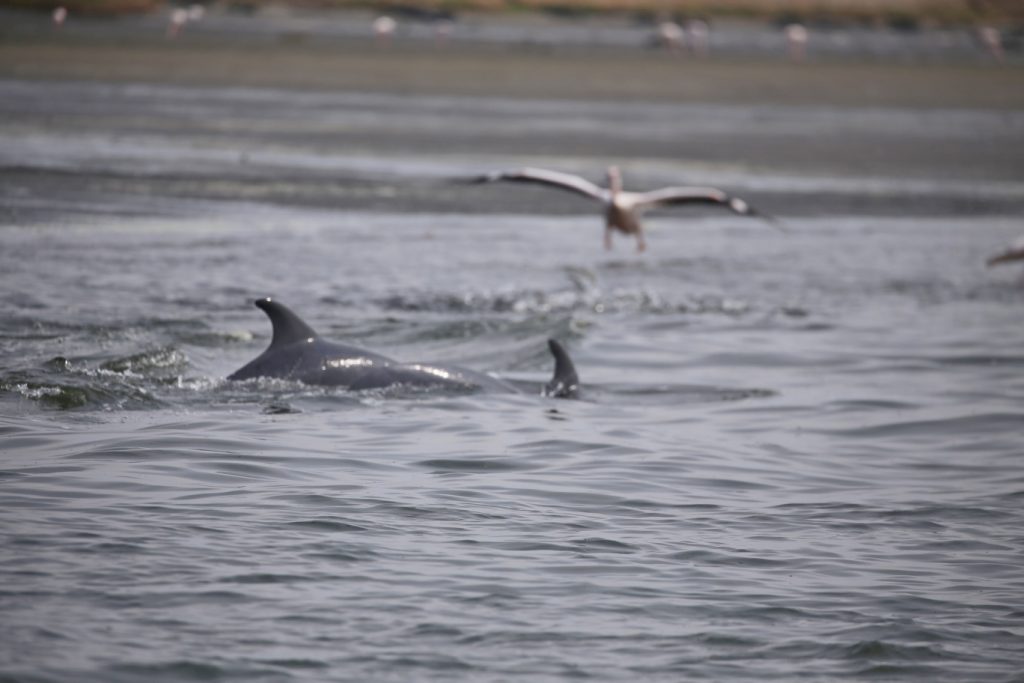
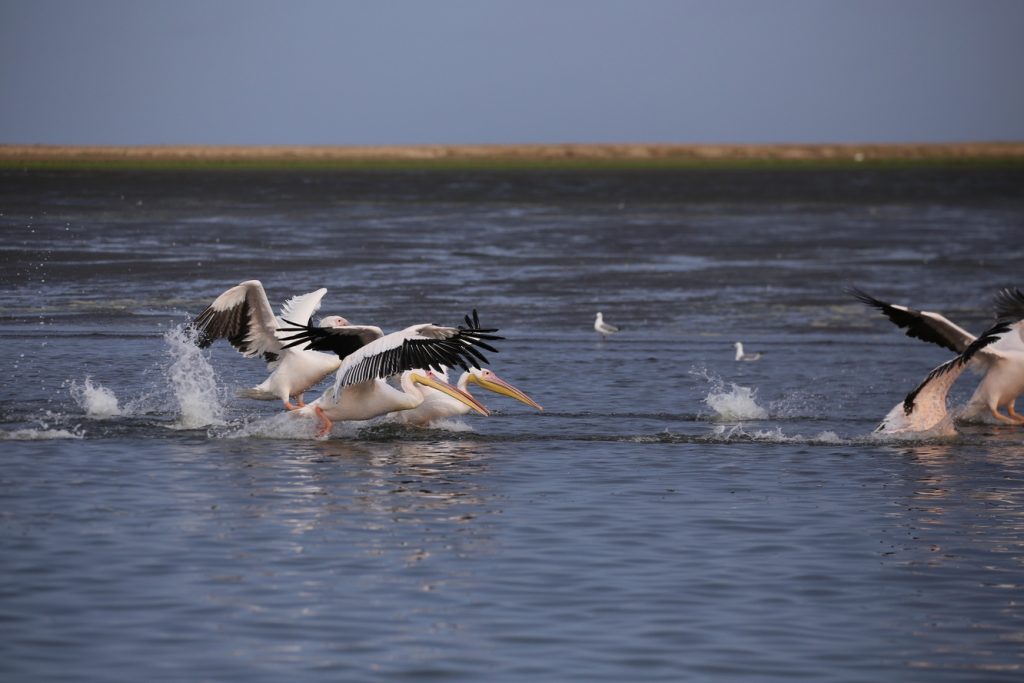
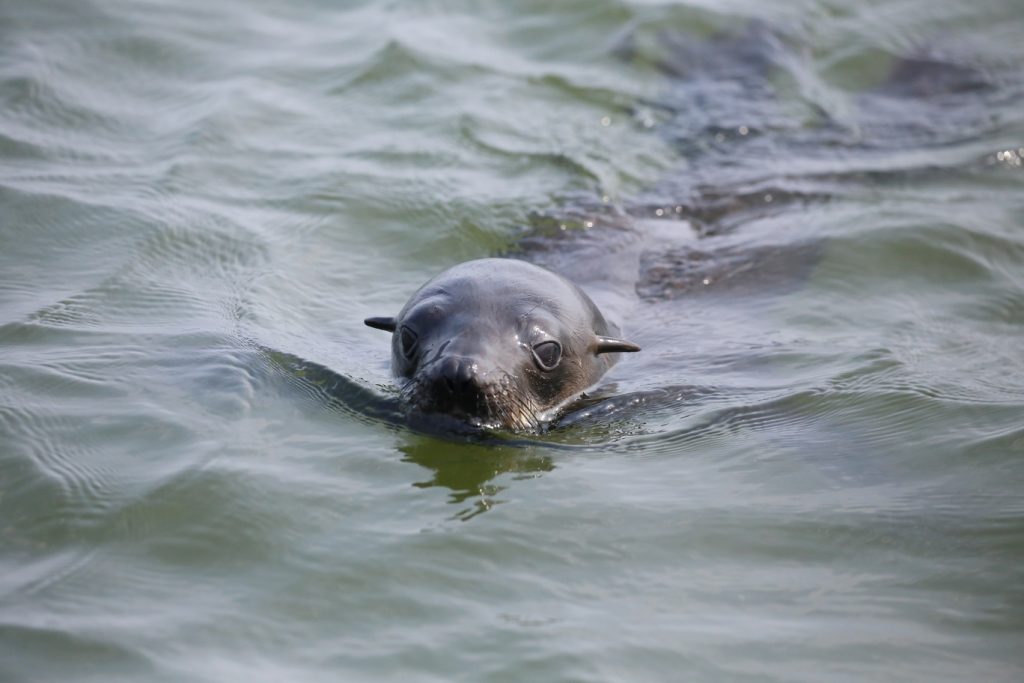
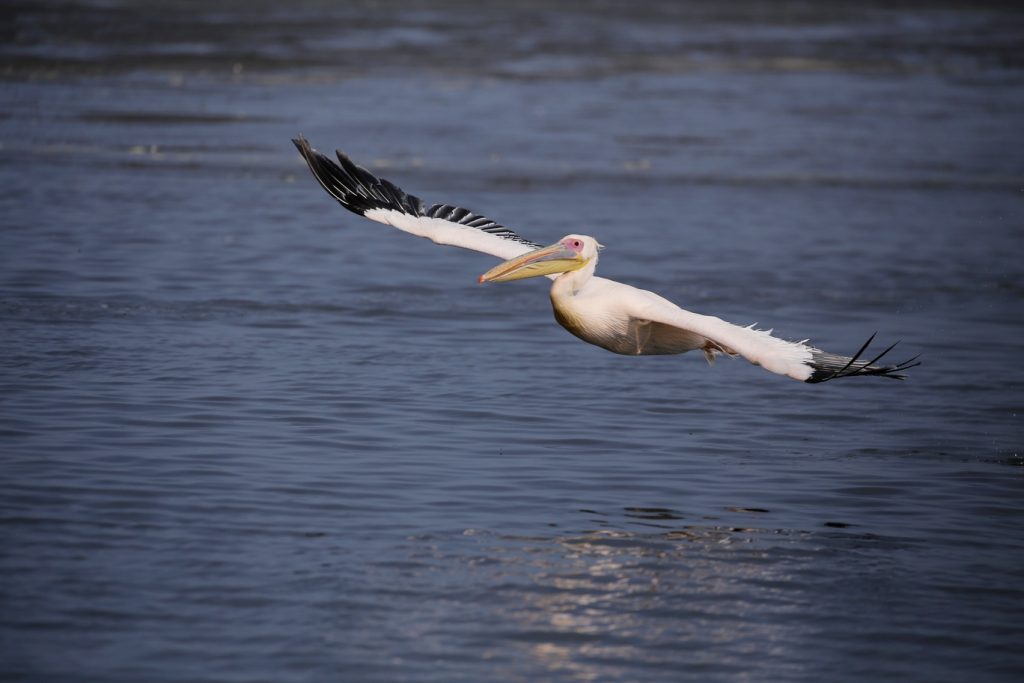
    Another week, another journey. While I can say that this week was not as hectic as the last two, it was not short of weird and wonderful moments. To start the week, a beautiful scene which made me eat my sarcastic words from last week’s article when I said “[i]t might seem like it’s all life and beauty on Blue Planet”. We began that day by observing bottlenose dolphins in the lagoon, before we had even launched the boat. Keeping an eye on their progress, we hurried to get on the water and ended up following a large group of around ten dolphins for two and a half hours. Immersed in a feeding frenzy, the cetaceans surrounded our vessel and rushed across the surface of the ocean, hunting fish. What made this experience stand out, was the addition of groups of pelicans and Cape fur seals all together behind the dolphins, nabbing the fish that managed to jump out of the reach of the cetaceans. It was an immense sight and depiction of the food chain. As if the whole scenario was not awesome enough, a bronze whaler (Carcharhinus brachyurus) breached into the air multiple times beside one of the tour boats nearby. This all occurred just offshore, where the cetaceans were feeding, and thus seals and jackals could also be sighted on the beach in the background. It was the best kind of sensory overload.

    dolphins_pelican
    Dolphins, pelicans and seals, all feeding together. An interspecies banquet. Photographers (left to right): Darren DuPlessis, Simon Elwen, idem.
    fursealpup

    Dolphins, pelicans and seals, all feeding together. An interspecies banquet. Photographers (left to right): Darren DuPlessis, Simon Elwen, idem.

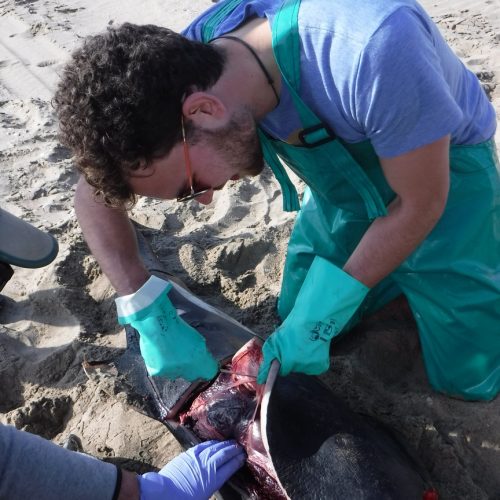
    To counterbalance the lively ecstasy of this encounter, we were called out a few days later for a Heaviside’s dolphin stranding on the west stretch of beach around Walvis Bay. The animal was dead, but well preserved. Whilst one may wish that the animal was never stranded in the first place, such specimens are perfect opportunities for the NDP to collect valuable data on the health and condition of the Heaviside’s dolphin population around Walvis Bay, a population that the project monitors closely. As such, we dissected the animal on the beach and performed a brief necropsy. We found that its lungs were riddled with worms, something Heaviside’s dolphins commonly suffer from, and it can kill them in extreme cases. I had recently been involved in the dissection of a pygmy sperm whale and the experience came in handy as I could take blubber and skin samples, dissect lung and kidney tissue, and analyse these each in turn. I felt comfortable during this process and my mind was more focused on the task at hand than the gore. Experience was already paying off, and it felt good knowing that the morbidity I had felt during the last necropsy had now translated into a practical skill.

    Necropsies do not get less gruesome, but you start focusing on a different aspect of the job. 
Photographer: Monique Laubscher
    Necropsies do not get less gruesome, but you start focusing on a different aspect of the job. Photographer: Monique Laubscher

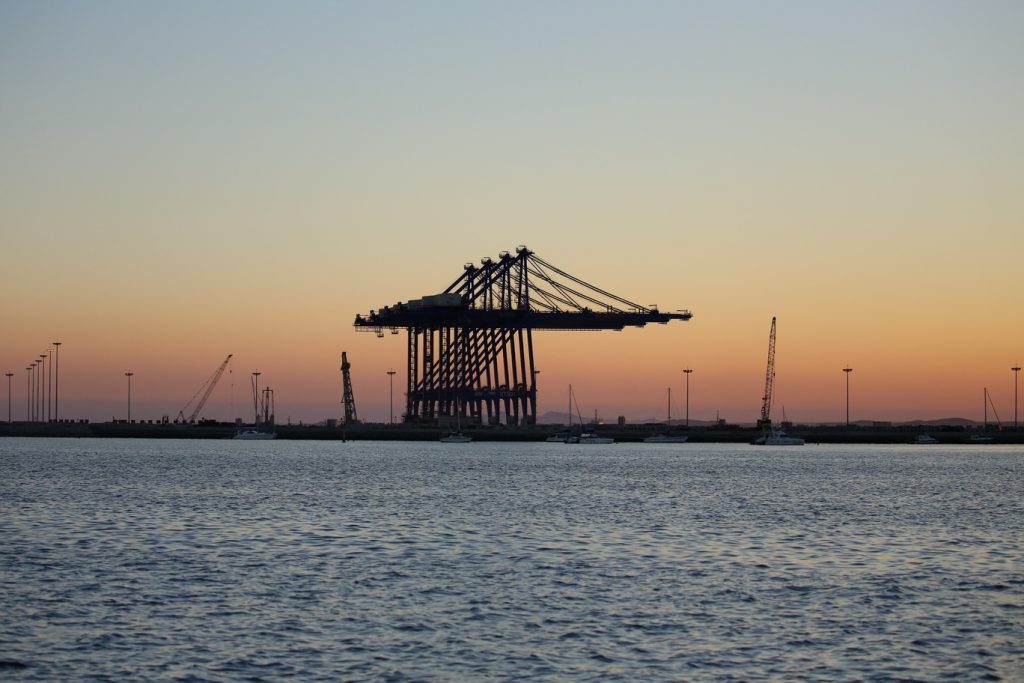
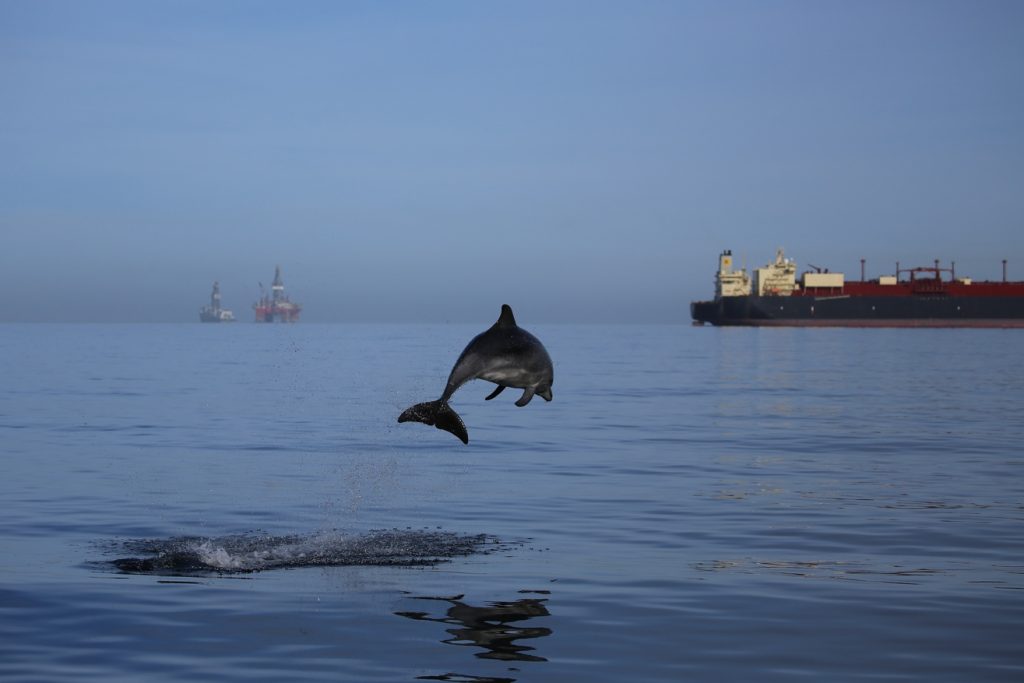
    Noise pollution wins this week’s problem. In the actual bay of Walvis Bay, there are numerous industrial ships anchored everywhere. Some of these ships are tied together to lower anchoring costs, resulting in sights such as eight huge shipping freighters that float adjacent to each other, casting a threatening shadow. Furthermore, there is an oil rig that stands tall and ugly at the edge of the bay. The issue is that all these boats and rigs leave all their equipment such as sonar on and running, so that they are emitting noise all year around throughout the bay, even if they are not being used. Sonar has been shown to be a factor leading to mass strandings of marine mammals and certain species (such as the Beaked whale) are especially sensitive to the mid-frequency noise of sonar. Add to this the noise from the eager tour boats that I have previously mentioned, and the level of noise below the surface in the bay becomes a concern. The NDP is attempting to tackle this issue by conducting research on the effects of noise pollution on cetacean behaviour, so as to be able to officially underline the extent of the problem. They have made some progress already, but these effects are hard to quantify and analyse precisely and it remains a considerable task to fully understand the ins and outs of the issue.

    What I learned this week is a compilation of the lessons I learnt in the previous weeks. Conservation is complex, and it is crucial to address that complexity without being overwhelmed. It is easy to think conservation is one benevolent journey after another and that once you get into it, you will be making a difference with everything you do. The reality is that for every problem you think you find a solution to, another one will appear. In these three weeks I have encountered one issue facing cetaceans and other animals after another, be that noise pollution, tourism or entanglement. There were moments where it felt a lot like there is no way of solving all these problems without new ones coming up, and sometimes that is the case. The amount of death I have been exposed to during my stay furthered these thoughts. But when you witness scenes like the feeding frenzy of dolphins, pelicans and seals, or the journey of a mother humpback whale with her calf and all the other moments where nature shows itself at its finest, you realise that while bad things will always happen, you are not trying to prevent death or reverse the laws of nature, you are trying to minimise human impact on the natural way of things and protect the lives of living beings that cannot communicate to us through words what imbalances exist. Focusing on one problem at a time and doing what you can to solve that problem is one weight added in favour of nature, tipping the scales ever so slightly towards the animal’s side.

    Link to week 1, week 2, and week 4 articles.

    • A pelican soars through the air. 
Photographer: Simon Elwen
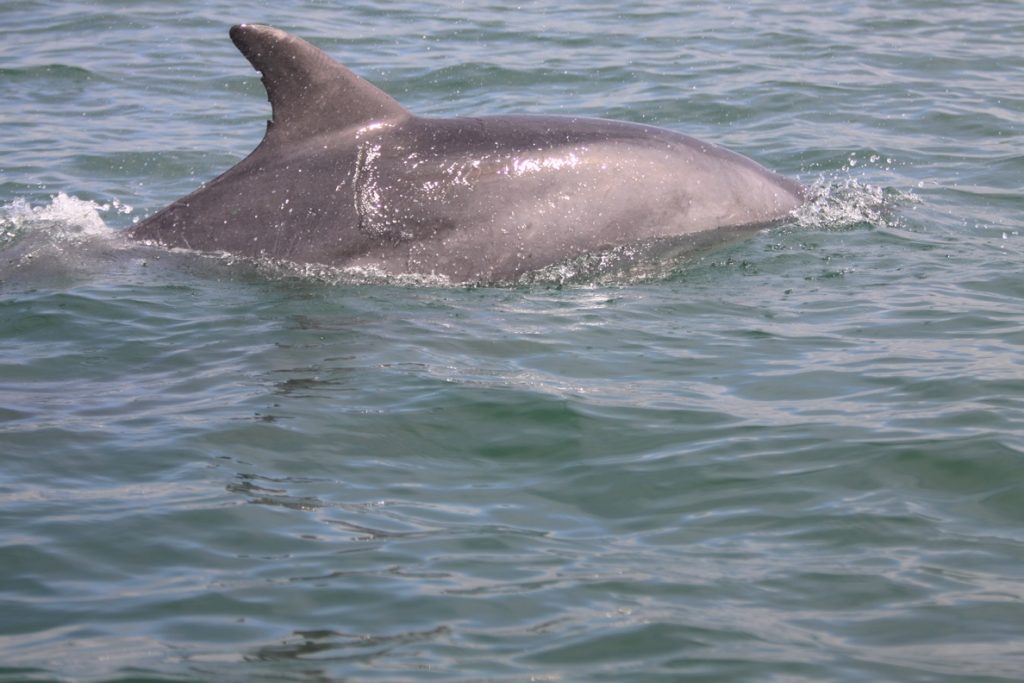
    • A bottlenose cruising by. 
Photographer: Jaz Henry
    • One of the many noise sources. Photographer: Simon Elwen
    • Bottlenose dolphin in busy Bay. Photographer: Simon Elwen
    NamibianDolphinProject Logo_W&B

    You can find more information on the research, conservation and outreach projects of the Namibian Dolphin Project on their website. Here you can also check for upcoming internship opportunities if you want to experience Namibian conservation work firsthand.

  • 20180812_6D_IMG_0218_WVB Pelican Point survey (MLaubscher)
    15October

    A Humanities Student in a World of Science – Analysing

    Article written by Jaz Henry. He studies English Literature and Philosophy and always thought the world of marine conservation was slightly out of his grasp, not having studied Biology or Zoology. So, this summer, he decided to let experience decide whether pursuing this line of work is the right choice for him. After applying to various projects, he was accepted as an intern for the Namibian Dolphin Project. This is the second post in a series of articles recounting his weekly experiences as a humanities student in a world of science and conservation. 

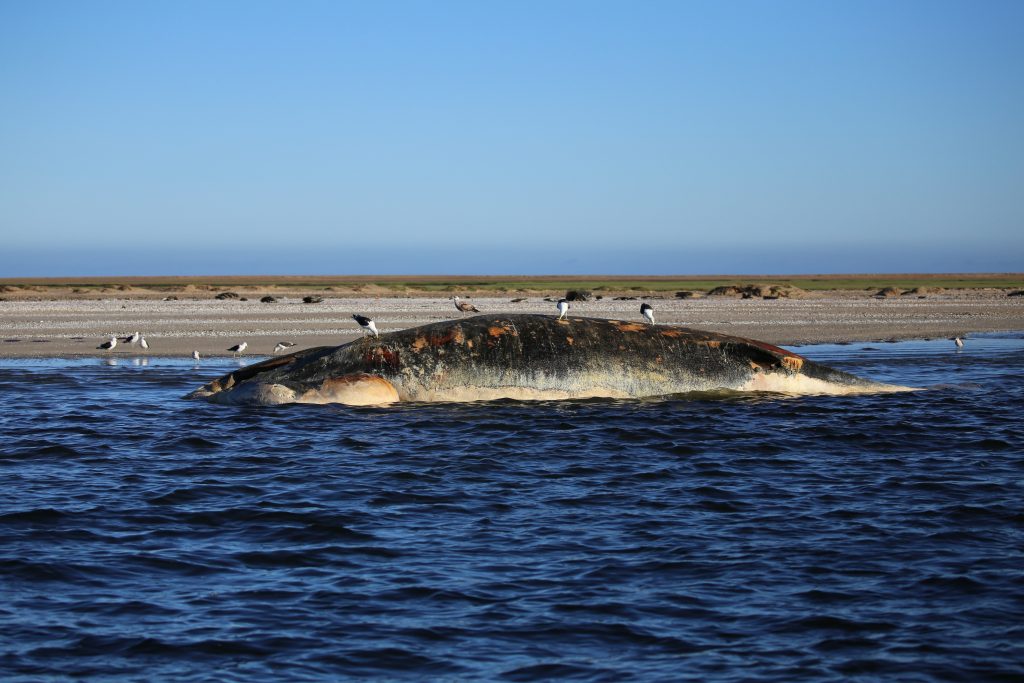
    After all the learning and experiences of the first week, one might expect the following week to be tamer. That was not the case, and the adventures kept piling up. On my eighth day, we found two stranded humpback whales along the coast as we were out at sea. One of them had been reported and the other we stumbled across as we were searching for dolphins. These whales were decomposing and were not pretty. The smell was potent, and the animals no longer looked majestic, having lost all their form to decay. Part of the work however, is collecting samples and measurements from dead cetaceans, and it is vital work. Such data can provide valuable insight into the feeding habits, movement, health, pollution levels and many other aspects of the animal.

    One of the dead humpback whales. Its grace dissolved by decay, but this type of stranding represents a gold mine of potential information about all the factors surrounding the animal. Photographer: Simon Elwen
    One of the dead humpback whales. Its grace dissolved by decay, but this type of stranding represents a gold mine of potential information about all the factors surrounding the animal. Photographer: Simon Elwen

    Similarly, we responded to a stranding report of a dead pygmy sperm whale (Kogia breviceps) along the northern shore. Unlike their more renowned cousin, the sperm whale (Physeter macrocephalus), pygmy sperm whales are small and largely unknown to humans, living deep in the ocean and staying hidden to avoid predation, making finding one all the more interesting. It was also the second ever recorded pygmy sperm whale found in Namibia. This individual was a calf and thus posed little problem in the way of transport. We drove it to a nearby hospital where it most probably became Namibia’s first whale to get a CT scan. The results indicated that the cetacean may have died of Brucellosis, a zoonosis that can affect the brain of the animal.

    The CT scan results of the pygmy sperm whale.
    The CT scan results of the pygmy sperm whale.

    A few days later, we performed a necropsy of the animal in a lab to take samples and get an in-depth understanding of the condition the mammal was in. The necropsy was a bloody affair and the whale no longer resembled a living organism by the end of it, something I was not used to, and something a lot of people would find difficult to digest. I managed to open the skull and the team hypothesised that the CT scan results were correct, as the brain seemed liquified. It was fascinating to learn about the diet and health of such an animal by the contents of its stomach, quality of the lungs and kidneys etc., but it is not for everyone. It is a stark contrast to what many learning conservationists initially think of the work. It is not hugging seal pups, it is dirty and morbid at times, and something to think about when deciding whether it is right for you. But if one can overcome the presence of death and decay, seeing the bigger picture yields many rewards. For instance, should this cetacean have died of Brucellosis, it could have an impact on the health and population of not only pygmy sperm whales, but all other marine mammals in the area as well, and it is important to understand and detect these events.

    Performing a necropsy on the pygmy sperm whale.
    Performing a necropsy on the pygmy sperm whale.

    It was not all blood and guts this week. I was placed on a boat tour to collect data about where tour boats travel to around the bay and the encounters they might have etc. These types of survey are called opportunistic surveys, as I collect data depending on what I encounter on the boat, without a plan of where I am going and what I am going to observe. It was a relaxed environment to work in and I was treated to some oysters along the way, which made me feel like a very privileged intern. These opportunistic sightings are valuable for recognising patterns of human interaction and cetacean reaction. The headline of the tour was encountering a leucistic Heaviside’s dolphin that had not been seen by the NDP in two years. Leucism is the partial loss of pigmentation which results in white, pale or patchy coloration of an animal – not to be mistaken with albinism, which is the complete loss of melanin resulting in a completely white animal, including loss of colouration in the eyes.

    The Leucistic Heaviside's dolphin. Its front completely white and its rear a faded grey. 
Photographer: Jaz Henry
    The Leucistic Heaviside's dolphin. Its front completely white and its rear a faded grey. Photographer: Jaz Henry

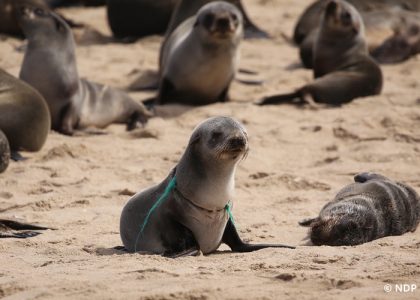
    The problem of the week was entanglement. One day when the weather did not permit us to go out to sea, we did a land survey of jackals and Cape fur seals instead. What we were mainly looking for amongst the huge colonies of seals that cake the beaches around Walvis Bay, is entanglement. The first seal we passed in the car, lay aside from any colony and lifted its head to reveal scarring and a fishing line caught around its neck. We saw multiple such cases. Walvis Bay is a fishing port and there are oyster and mussel farms in the area, which employ nets to cultivate the relevant crustaceans. As in any area where human meets sea, there is bound to be something that a marine mammal can get caught or entangled in. I do not know if these seals could feel what was wrapped around them, but it looked excruciating to the naked eye.

    An entangled Cape fur seal.
Photographer: Monique Laubscher
    An entangled Cape fur seal. Photographer: Monique Laubscher
    20180812_6D_IMG_0030_WVB Pelican Point survey (MLaubscher) (2)
    20180812_6D_IMG_0029_WVB Pelican Point survey (MLaubscher) (2)

    Simon explained that to free all these seals is a full-time job, and not one the Namibian Dolphin Project has the resources to cater to, seals not being their focus after all. They do however work closely with a few benevolent local kayak guides, who have taken it upon themselves to free any entangled seals they may find. Freeing them from their rope or fishing line prison is hard work; the bulls can weigh up to 200 kilograms and could easily take off a finger if approached incorrectly.

    The unfortunate truth I learned this week about marine conservation is that to understand and protect the living, you must learn from the dead. It’s not all sunshine and rainbows and when you are prying through an animal’s organs you do have to stop and remind yourself what you are doing it for. It might seem like it is all life and beauty on Blue Planet, but someone along the line had to be knee deep in a carcass to bring you the wise words of David Attenborough.

    Link to week 1, week 3, and week 4 articles.

    References

    Cfsph.iastate.edu. (2018). [online] Available at:http://www.cfsph.iastate.edu/Factsheets/pdfs/brucellosis_marine.pdf

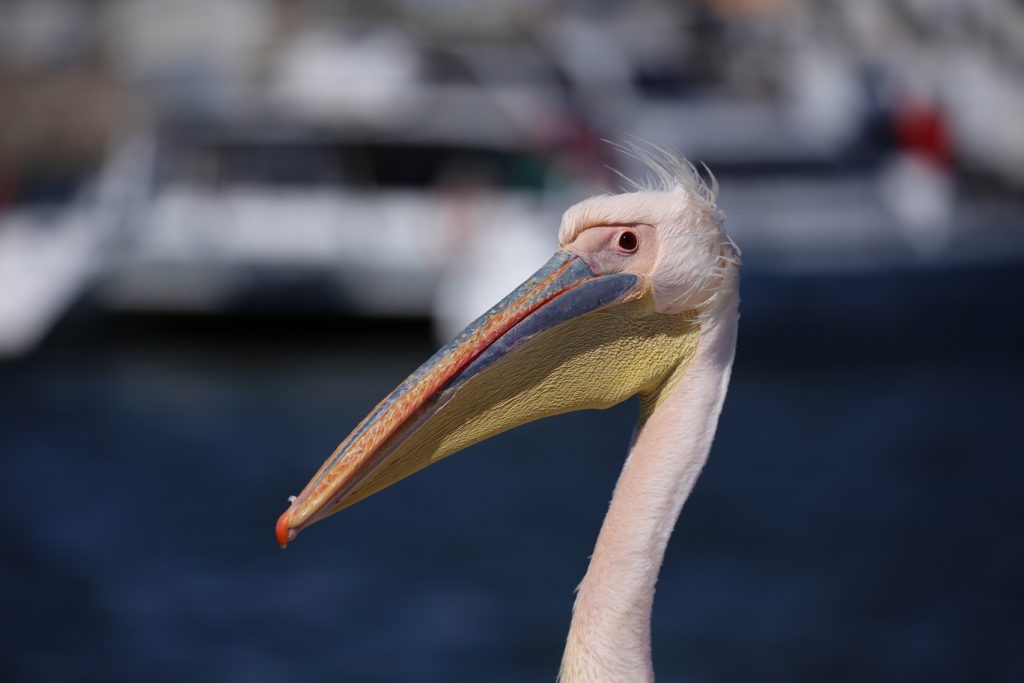
    • Curious pelican. 
Photographer: Jaz Henry
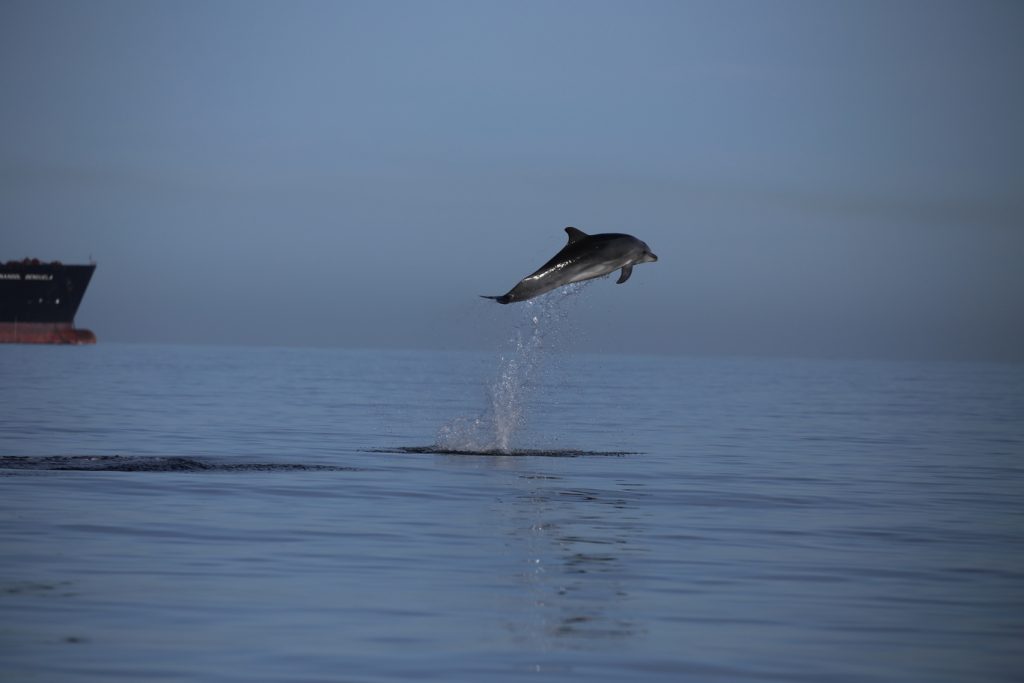
    • A bottlenose dolphin leaping. Photographer: Simon Elwen.
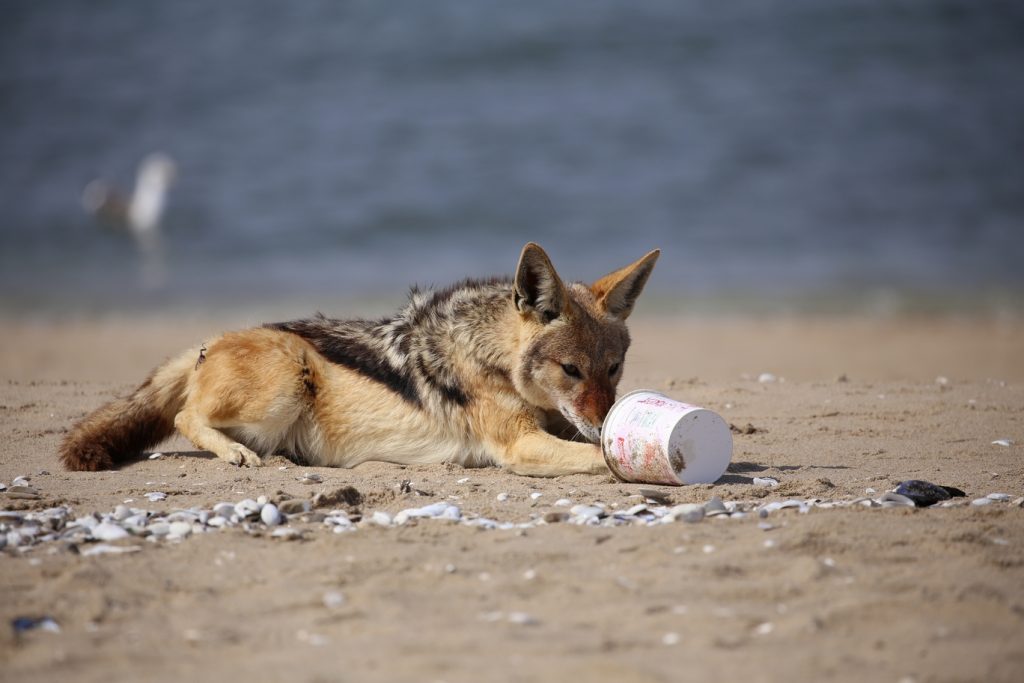
    • A jackal eating out of a yoghurt tub, a reminder of human impact. Photographer: Monique Laubscher
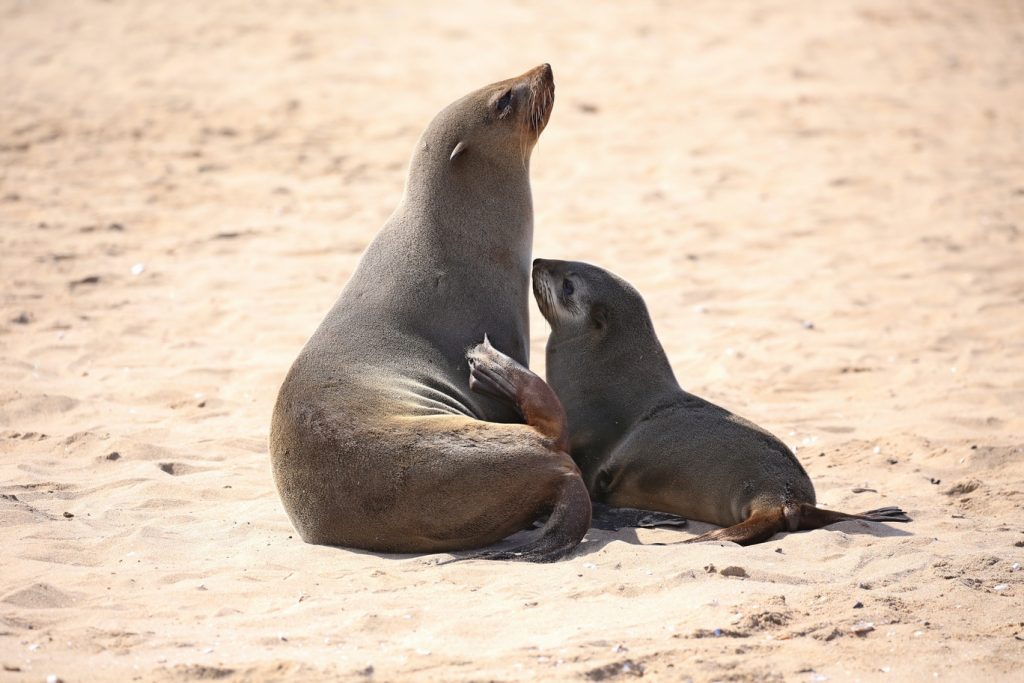
    • Cape fur seal calf hugs its mother.
Photographer: Monique Laubscher
    NamibianDolphinProject Logo_W&B

    You can find more information on the research, conservation and outreach projects of the Namibian Dolphin Project on their website. Here you can also check for upcoming internship opportunities if you want to experience Namibian conservation work firsthand.

  • Humpback whale breach
    10August

    Whale Research and Conservation in the St Lawrence

    Text written by Félix Feider, 22-year-old final year undergrad studying Marine Sciences at the National University of Ireland, Galway. He participated in a 2-week research programme at the Mingan Islands Cetacean Study in Longue-Pointe-de-Mingan, Québec, Canada.

    My whale research adventure in Canada started in late July. I boarded a Dash from Montreal to Sept-Iles, said goodbye to the big city life and hello to the Canadian wilderness. After a 2-hour drive, I arrived in small, but charming, Longue-Pointe-de-Mingan on the North Shore. It was immediately clear that this region is a hidden gem, with little tourists coming here and a lot of people never even having heard of it (including me until a few months ago). On the north side of the town is vast, seemingly endless dense forest and on the south side is the Mingan Islands Archipelago and the St. Lawrence, sprawling with life. The weather in this region is very volatile, with cloudless skies suddenly turning stormy and rainy. Only good weather conditions allowed us to go out on sea to look for whales. On a good day we would get up at 6am and prepare the 2 inflatable boats to be ready to leave Mingan at 7:30. The archipelago itself hosts a range of smaller marine mammals, such as seals, porpoises and even minke whales. However, the main focus of the research station lies on blue whales, fin whales and humpback whales in the St. Lawrence, which use the highly productive waters closer to Anticosti Island in the south as feeding grounds. After a 1.5-hour drive, the first whales could be spotted. The very first whale that I saw was a right whale, which are relatively new to this area and have encountered hazardous events here in the last weeks, with close to two percent (10 individuals) of the North Atlantic population (estimated to be slightly higher than 500 individuals) having died due to anthropogenic reasons, such as ship collisions and fishing gear entanglements. The North Atlantic right whale is listed as critically endangered, meaning that the species is at risk of going extinct if more animals keep dying than entering the population.

    • Critically endangered right whale
    • Harbour porpoises are the smallest cetaceans in the St Lawrence.
    • Right whale in the St Lawrence
    • Félix on the North Shore

    The research station mainly uses two means of monitoring the cetacean populations. The first and most abundantly used method is photo identification (photo-ID), where pictures are taken of the whale’s unique ¨fingerprint¨ to allow identification. This fingerprint refers to a body part of the whale that has a shape and/or pigmentation pattern unique to each individual and that can be used to identify individual whales just using a few pictures. The defining features used for photo-ID changes from species to species. The humpback whale is the easiest to identify: a picture from the right and left side of the dorsal fin and the ventral side of the fluke show highly distinctive shapes and pigmentation patterns. Fin whale identification is based on pictures of the right side dorsal fin and the area behind the blowholes, which hosts what is called the blaze and chevron, pigmentation patterns that are unique to an individual, but much more complicated to differentiate to an untrained eye such as mine. The blue whale was once abundant in this region, but since the early 1990s their numbers in this region have shriveled and only a handful of individuals are nowadays seen here every season. Sadly I did not have the chance to see one myself. Photos are also used to investigate how many animals have been entangled in fishing gear, particularly by examining the number of animals with scars around their peduncle, which is the area where the tailstock meets the fluke.

    • The ventral side of the fluke of humpback whales is used to differentiate among individuals
    • The chevron is used for photo-identification in fin whales
    • The blow of fin whales can be spotted from a great distance. MICS Photo
    • Humpback whale cow and calf

    The second most used method of monitoring the populations is biopsy sampling. An arrow with a 3 cm long hollow metal tube as tip is placed at the region below the dorsal fin, at a perpendicular angle, using a crossbow. The tip only pierces the skin and the top layer of the fat layer, or blubber, which probably feels like a small mosquito bite to the whale. The skin and blubber are later separated in the lab and used for different analyses. The skin is used to extract the DNA, which is in turn used to genetically determine the sex of the individual and to learn more about the population structure and gene pool by defining relationships among individuals. The blubber is used for studies on toxicity load, hormones and pregnancy rates. All these data sets become even more valuable over long term study and since the station is now operating for 38 years, the amount of data collected to date is huge and has already helped us understand a lot about migration, behaviour, life cycle, sexual maturity and much more. Whenever the opportunity arises, researchers also collect fecal (poo!) samples which hold valuable information on the diet and body condition of the animals. That way we can learn what the whales feed on and how healthy they are.

    On top of the two above stated methods, the station also uses several tagging methods to monitor the behaviour of the animals underwater. It is important to remember that most of the research here focuses on the brief moments that whales spend on the sea surface, however our knowledge about their behaviour below the surface is very limited at best. Tagging can tell us about the depths they travel to, their feeding behaviours, their diving patterns, migration pathways, important feeding grounds and much more. The problem about tags are numerous though; they are quite expensive (some cost 25.000$), it is difficult and time consuming to place them, they can sometimes hold for just a few minutes and rarely longer than a month and new studies show that the whales’ behaviour is influenced by the tags and therefore the data could be misleading. Despite these problems, certain individual cases in which the tags have stayed put over a long period of time have shed light on some of the many question that are still unanswered. For instance two tagged blue whales have been monitored to stop north of the New England Seamounts to feed over a few days before continuing their migration, the assumed importance of this region to this species was previously not known.

    • Researchers use the blow (here of fin whales) to spot the animals from the distance
    • Breach of a humpback whale, always a spectacular sight
    • Before the humpback whale dives, it lifts the fluke high out of the water.
    • Fin whale cow and calf in the St Lawrence

    After a long day at sea, having seen and photographed a lot of whales and sampled a few biopsies if possible, we returned to the pier in Mingan. Dinner was always provided at the only restaurant in Longue-Pointe, Le Macareux Dodu, and breakfast at La Chicoutée, both of which had amazing food and the service was always extremely friendly. Everybody whom I’ve met in town was extremely welcoming and it was very interesting to get to know their stories and way of life. On rainy, foggy or windy days we could not go out to sea. Instead I visited the station’s museum, I got presentations about the history of the station, their work, future plans, I went to an Innu Cultural Centre or simply helped at the station, identifying and matching whales that were photographed on previous days or helped wherever else I could. One of the best parts of my experience here was the team. It was an international melting pot of scientists from all around the world, with different backgrounds and each and every one was very welcoming, friendly and helpful. I got to know a lot of amazing, fascinating characters that became friends and who I am hoping to meet again sometime in the future.

    To conclude, the 2 weeks that I spent at the Mingan Islands Cetacean Study were fascinating. I learned a lot about marine mammology that I am looking forward to implementing into my future academic career choices. I got spoilt with the diversity and amount of marine life on the St. Lawrence, having sighted numerous fin, humpback, minke and right whales, porpoises, seals and even a few basking sharks, on a good day I saw more than 20 whales. Since my major interest is in marine conservation, I now know the hard work that is required to gather population data for conservation efforts to be possible. My days at the station and time outside working hours were very informative and interesting as well. Long story short, I had an absolutely great time. Since there are still more questions than answers regarding cetaceans and every answer reveals new questions, their work here is far from done and there are many future research opportunities still available. I highly recommend this experience to anybody who wants to know more about whales, cetacean study, the methods of research and the life at a remote research station, I can promise you that you will not regret coming here.

    • Beautiful rock formations on the North Shore
    • On windy days there was time to explore the North Shore
    • Félix scanning the horizon for whales
    • The North Shore
  • Common dolphin
    08January

    Cetacean Field Course in Tarifa (Spain)

    12 days in July 2017 (exact dates to be confirmed)

    The Tarifa field course is Odyssea’s most popular project. Situated at the southernmost tip of Europe, Tarifa is the perfect setting for a cetacean field course. The Strait of Gibraltar is home to seven species of whales and dolphins: pilot whales, bottlenose dolphins, striped dolphins, common dolphins, sperm whales, fin whales, and killer whales. The first four species are year-round residents with the pilot whales being the most commonly observed species. Our field course in July usually coincides with the presence of killer whales, which hunt the tuna passing through the Strait of Gibraltar. Fin whale sightings are rarer; nicknamed “greyhound of the sea”,  a small number of fin whales move each year from the Mediterranean to the Atlantic and despite their size they can be easily missed.

    During the field course, you’ll be introduced to the biology and ecology of whales and dolphins, with particular focus on the seven occurring species. You will be accompanied by experienced marine biologists who will teach you about the main methods used to study these animals, namely behavioural observations and photo-identification. You will be able to put your newly acquired knowledge to use during the boat trips with our partner Turmares. During a visit of a local rehabilitation center, you will learn more about the biology of dolphins and marine turtles and the threats they face (e.g. plastic pollution, entanglement, or noise pollution).

    Tarifa and its surroundings are also famous for its excellent bird-watching opportunities and is a must-do activity! There is usually also time for a trip to Roman ruins, the Rocks of Gibraltar and various sandy shores. For an account from one of our past interns, we’d recommend reading Livia’s article here.

    For more information, please do not hesitate to contact us under info@odyssea.lu. Information on exact dates and prices will be published as soon as available.

    • killer whale pod
    • Pilot whale newborn
    • Tarifa group picture
    • Tarifa telescope work
    • pilot whale spyhop
    • Tarifa chameleon
    • killer whale 1
    • dsc_6167
    • tarifa_boatwork
    • common dolphin1
    • ruins_tarifa
    • dsc_8501-2
    • dsc_9363
    • Gibraltar scope
    • dsc_0541
    • dsc_5340
  • Killer whale Tarifa
    09November

    TARIFA Strait of Gibraltar

    killer whales

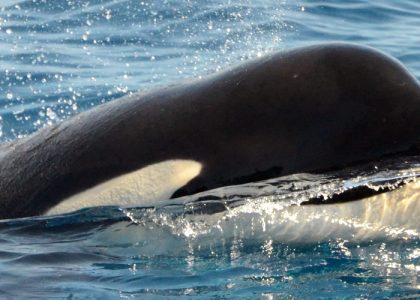
    Ever wanted to look an orca in the eye without chlorine water and speakers blasting music? Tarifa is the place to go. In summer, Odyssea takes you to the southernmost point of continental Europe, in the Strait of Gibraltar. Along with a half dozen other people, you get to embark on the legendary Jaquelin, Turmares’ whale-watching boat, to look for killer whales. You’re very likely to encounter other marine mammals as well: several species of dolphins and, if you’re lucky, even the occasional transiting fin whale. You learn the technique of photo-identification, a method used to recognize individuals using the unique markings on their dorsal fins. Aside from the time spent out at sea, you also get to explore the town of Tarifa, and a trip to Gibraltar and the Top of the Rock, as well as to the ancient roman ruins of Bolonia, are mandatory.

    You’ll get to know the good ol’ chucky doll on a fence on the side of the road, meet the monkeys in Gibraltar, realize that Pierre seems to know EVERYONE in town, eat the best pizza in the world after cutting it with scissors, maybe get seasick and miss the sightings, but that’s ok, the others will show you their pictures. You can sunbathe on the beach and frolic in the waves, climb the top of the dune in Bolonia and ideally roll down in the hot sand. Basically, it’s a trip where you learn a lot from Pierre’s evening lectures and field work, but you also get to know people who share your interests, and have loads of fun with the team.

    Text written by Livia Gavard, whose company brought us a lot of joy and laughter during the field courses in Tarifa and Florida.

  • Grey_Whale_Breach
    21September

    Gray Whale Field Course with Sea Kayak Adventures

    The Eastern Pacific gray whales mark one of the greatest conservation success stories after their phenomenal recovery from several hundred animals left after whaling in the early 1900s to a current population of over 20,000 animals. Every year, gray whales undertake one of the longest migrations in the animal kingdom, migrating from their summer feeding grounds in the arctic waters of the Bering Sea to the breeding lagoons in Baja California, Mexico.

    One of these breeding lagoons, Magdalena Bay, was the setting for a pilot project run by Odyssea in collaboration with  ROW Sea Kayak Adventures from 29 Feb to 9 Mar 2016. The aim of the project was twofold: Odyssea researcher Anna Schleimer was introducing her two interns to the main research techniques used to study marine mammals, while also assessing the potential of organising regular internships in Magdalena Bay. The location could not have been any better: tenting on the sand dunes surrounding the shallow lagoons, we could easily spot gray whale cows and calves from shore while drinking our early morning coffee. Once described as “devil fish” for the way they attacked whalers, gray whales in the lagoons are now known as the “friendly whales” as some animals readily approach whale watching boats and seem to enjoy a good scratch from the ecstatic tourists.

    Equipped with cameras and GPS, the team hopped onto small fishing boats, locally known as pangas, to start their daily surveys. Every gray whale has a unique pigmentation pattern, which lends itself to the identification of individuals, just like human fingerprints! By taking pictures of these unique patterns on the flanks of the whales, a technique known as photo-identification, researchers can keep track on the total number of animals visiting the lagoons for example. Over the course of our stay we identified 13 separate cow and calf pairs. Needless to say that for an untrained eye all whales look the same, even for the two interns Gaynell and Zoe. But within days, they memorised distinct marks or scars for every individual and could identify previously encountered animals with ease. Throughout the week, we had interesting discussions about conservation, code of conduct, whale watching, and how Odyssea could get involved in the future.

    By the end of the field course, most animals had left the lagoon to start their migration north to their feeding grounds in the Arctic. Some friendly gray whales approached also our boat, a very curious behaviour where the cow pushes the calf to the boat. During land-surveys, the full extent of the whale watching activity became evident; at peak times 13 pangas loaded with cheerful tourists followed a single cow and calf pair. While there is a code of conduct in place to prevent such overcrowding, the regulations are poorly enforced in Magdalena Bay and the panga captains believe that only a client that gets to pet a whale is a happy client willing to give a good tip. The issue was discussed with the local guides, who agreed that the reinforcement of the code of conduct needs improving. Odyssea will follow up on the development of this topic.

    When the team returned to civilisation after 9 days at whale camp as amateur astronomers, bird-watchers, and coyote-track readers, they realised how much they had learnt and all agreed that they had exceeded their goals for the trip.

    Anna Schleimer, vice-president of Odyssea

    • grey_whale_fluke1
    • grey_whale_pair2
    • sand_dunes
    • tent_camp
    • sea_lions2
    • pelicans2
    • scorpion
    • coyote_tracks
    • sunset_guests
    • bottlenose_camp
    • sea_lion1
    • blowhole
    • grey_whale_calf
    • pelicans1
    • grey_whale_pair3
    • grey_whale_pair1
    • grey_whale_fluke2
    • grey_whale_camp
    • coyote_mangrove
  • manatee-cow-calf
    06August

    Meet the Manateam – Adventures from Crystal River, Florida 2015

    Five high-school students from the Lycée Michel Rodange and Lycée Aline Mayrisch teamed up for the first edition of Odyssea’s internship on manatees in Crystal River, Florida. They wanted to discover, study, and raise awareness about these gentle “sea cows”. To do so they spent a week with two members of Odyssea in Crystal River, a very special area where manatees seek refuge from cold waters during the winter. This is one of the very few places in the world where one can snorkel with manatees under very strict surveillance of Park rangers. Before being allowed on a kayaking or snorkeling trip, you must watch a movie from US Fish and Wildlife which explains how visitors must behave when approaching manatees, together with the regulations and fines which await you if you do not stick to the rules. The Florida manatee is a protected species and it is Florida’s emblematic animal.

    Crystal River is a network of freshwater channels and springs where manatees have come for thousands of years looking for warm water during the coldest parts of the winter. Although manatees look quite corpulent, they do not have a lot of fat under their skin, which makes them very sensitive to cold conditions. In recent years, during extremely cold winters, mass mortalities were documented among Florida manatees, and a condition cold stress syndrome was even described. During the past decades aggregations of tens to hundreds of manatees have occurred around hot freshwater runoffs from power plants.

    We decided to stay at a wonderful motel right on the water’s edge, situated in front of banana island, which is a manatee sanctuary. From our terrace we could observe manatees swim by or rest in the protected area in front of banana island. One day we even had a bottlenose dolphin pass by while we were picknicking by the water. Our days started very early, as soon as 6:30am for breakfast, in order to make sure to be on the water early with our kayaks, all geared-up to paddle to the three-sisters springs where most of the manatees hang out. Being early allowed us to get to the springs before most of the tourist boats, and it sometimes also surprised us with the most beautiful sunrise you can imagine, with incredible light and mist over the flat-calm water.

    It generally took us half an hour to get to the springs, and on the way we would met all types of birds, from kingfishers to herons, but also manatees on their way to/from the springs, and sometimes even dolphins. Thank God we did not come across any alligators or Florida snapping tortoises.

    Once at the three-sisters springs, we would tie-up our kayaks at the designed area and snorkel into the springs, crossing manatees on our way in. These springs are a magical place, with crystal clear water, beautiful trees with hanging moss, and lots of manatees resting or doing their thing. One can clearly see water bubbling out through the clear sand at the bottom, and there was always fish around the manatees, nibbling the algae growing on their backs.

    We very clearly instructed our team about the way we were to behave around manatees, and we had not come to pet the manatees. The way our group approached manatees was a very respectful one, always keeping our distance from the manatees, only interacting with them if the interaction was initiated by the manatee. Never stand in the way of a manatee, nor separate manatees. Touching a manatee would only be an option if the manatee clearly initiated contact and wanted to do so.

    Our mission was to photo-identify as many manatees as possible by taking pictures of their fluke and of any particular scar or mark on their body. Unfortunately, manatees get hit by boats quite frequently, and although propeller marks look very dramatic and are present in over 50% of the manatees, it’s the blunt traumas which cause most of the mortalities. Our other duty was to document as many behaviors as possible by photographs or video. We photographed as many a 68 different flukes, and managed to witness many different behaviors, from resting to nursing. But to tell you the truth, the manatees mostly just rested, because that is what they come to do in these warm springs. This is one more reason not to disturb them.

    In the morning we spent about an hour and a half with the manatees, observing them, taking pictures and sometimes interacting with them. We would then kayak back to our motel to have a nice warm shower, because even though the springs are relatively warm, it gets pretty cold after an hour and a half in the water without moving much. We would then have lunch by the water, looking at manatees from a distance, and looking for passing dolphins. After lunch we would then gear up and kayak back to the springs to see what the manatee activity is like, take more ID pictures, and observe them. We then would kayak back to shower again and prepare for our well-deserved dinner, before falling into bed completely exhausted.

    On two days we modified our daily routine in order to follow the team from the University of Florida, led by Dr Bob Bonde, who is THE manatee God, and has written the reference book about Florida manatees. We actually bought the book and he signed it for every single one of us. The team is very experienced in catching manatees, and every year for the past 15 years, they organise one or two catches to monitor the health of the local manatee population. We actually had organised our trip around their dates in order to make sure to be able to witness this unique experience. The team set up on a beach on a corner of the entrance to the three sisters, where lots of manatees swim by. One part of the team would deal with the catching of the manatees, the other one would do all the handling: from weighing to drawing blood, taking biopsies, micro-chipping them, and also making sure to mark them in order not to catch the same one twice. All this went very quickly as they caught their 200th manatee during the first day, and they caught 10 in total. This very experienced team with an entire group of veterinarian also monitored the stress level of every single animal during the entire time out of the water, making sure it would be on the safe side.

    Our team was allowed to stand right next to the manatees during all the handling and tests, and even participated in holding vials and carrying samples to the improvised field laboratory. There was a team from Puerto Rico which had come to gain experience for their own manatee catches back home. We had a great exchange of information, ideas and experiences between our team, the researchers, and the University students. We also made contact with local conservation organisation like the Save the Manatee.

    This manatee internship turned out to be a wonderful experience for all of us, not only because we had the incredible chance to snorkel with these wonderful animals and participate in the University of Florida’s research efforts, but because we were also very lucky with the weather and the manatees themselves. They showed up at the right time, and the day we left there was a big storm which forced the authorities to close the three sisters springs for several days. After we returned to Luxembourg we were informed that because as many as 300 manatees had entered the springs they had to close them for the public for several days.

    But most of all, we were very lucky because the entire team was wonderful, very motivated, cheerful and enthusiastic. We very quickly found the perfect name: the manateam! Thank you to all the participants for being brilliant people!

© 2026 ODYSSEA ASBL
  • Home
  • About
  • News
  • Contact