• Sign in

  • Join for free
  • Home
  • News
  • About
    • The ODYSSEA Team
    • Sponsors
    • Collaborators
  • Projects
    • Events
    • Past Projects
    • Research and Conservation
  • Support Us
  • Publications
  • Photos
  • Contact
ODYSSEA

Search

    • en
  • info@odyssea.lu
0
ODYSSEA
  • Menu
  • Home
  • News
  • About
    • The ODYSSEA Team
    • Sponsors
    • Collaborators
  • Projects
    • Events
    • Past Projects
    • Research and Conservation
  • Support Us
  • Publications
  • Photos
  • Contact

Tag : climate change

Home » Tagged "climate change"
  • Coastal_Threats
    09February

    Coastal ecosystems – Threats and challenges

    Article written by Venetia Galanaki.

    Mangrove forests, seagrass meadows and saltmarshes, collectively referred to as coastal ecosystems, are some of the most valuable habitats on the planet, yet they are being lost at alarming rates. With approximately half of the Earth’s population residing on the coastal zone, anthropogenic (meaning caused by humans) pressure on these ecosystems is much higher compared to more remote habitats. On a global scale, the annual rate of decline has been estimated to be 1–3% for mangroves, 2–5% for seagrass meadows, 1–2% for saltmarshes. If this trend continues at the same rate over the next 50 years, only 15% of area covered by coastal ecosystems will remain compared to the coverage at the end of World War II. Estimating loss is a tricky business as historical data are limited and more often than not highly inaccurate. However, what is worrisome is that the rates at which we are losing these important ecosystems seem to be accelerating despite the recognition of their invaluable ecosystem services.

    (Image credit: Duarte et al., 2008)
    (Image credit: Duarte et al., 2008)

    Numerous and often interconnected factors have led to this decline. 

    • Coastal development and Tourism: construction of pipelines, structuring of ports and deployment of cables for communication, has made the complete removal of these ecosystems common practice. Infrastructure built to accommodate the rapid increase of the tourism industry is leaving no room for these ecosystems. In addition, tourism related activities such as anchoring over seagrass meadows and the mere overcrowding in coastal areas is intensifying the pressure. Mangroves also suffer from overharvesting as their wood has a number of uses.
    • Land runoff and Pollution: Due to their close proximity to agricultural land, coastal plants are threatened by land large amounts of fertilisers and pesticides that end up in the water and can ultimately cause their death. The damage caused by runoff is further intensified In river estuaries where water is carried from large stretches of agricultural land. Additionally, specifically for seagrass meadows untreated sewage waste and aquaculture can be really harmful due to the load of organic matter in the water.
    • Invasive species also majorly impact these ecosystems as they can alter food webs and destabilise the entire ecosystem. 
    • Climate change related phenomena, primarily sea level rise, majorly affects the long term health of these ecosystems. Mangroves are damaged by excessive water in their roots and destabilisation of their sediment. In seagrass meadows, rising sea levels prevent the necessary light needed for healthy seagrass growth. Saltmarshes are usually constrained by human made structures and so sea level rise forces their area cover to decrease in a process known as coastal squeeze. Mangrove health is also intricately connected with coral reefs as they shelter them from strong currents. Reefs, being further offshore, constitute the first barrier for strong currents and waves and so when they are damaged, mangroves are more susceptible to them.

    The vast majority of threats occur on a local level and can be minimised through efficient coastal planning and management. Eliminating local threats and, thus allowing ecosystems to be healthier, can help build resilience against the more widespread effects of climate change. Sadly, the destruction of these ecosystems is often “justified” as a means to generate profit. However, such decision-making neglects the fact that the mere existence of coastal ecosystems greatly contributes to the economy through the ecosystem benefits that they provide, such as protection from storm surges and sea level rise and support of local livelihoods. In recent years, the efforts to conserve our coasts have intensified and the laws and regulations protecting them have strengthened. Yet, until bold commitments are made they will continue to decline at the rates we see today, leaving humans and wildlife at a loss.

    About the author: Venetia comes from Greece and the Mediterranean sea has always been her happy place. A Biomedical scientist turned conservationist, whose love for the ocean led her to pursue a career in protecting it. Over the years, she has conducted fieldwork in a variety of fields, including dolphin bioacoustics, marine pollution and seagrass carbon. She currently works in Marine Protected Area planning and management in Greece.

    Reference: Duarte, C.M., Dennison, W.C., Orth, R.J. and Carruthers, T.J., 2008. The charisma of coastal ecosystems: addressing the imbalance. Estuaries and coasts, 31(2), pp.233-238. Full article here.

  • Mangrove_Malapascua
    07January

    Blue Carbon – The importance of coastal ecosystems in climate change

    Article written by Venetia Galanaki.

    What is the first thought that springs to mind when thinking about ecosystems that contribute in reducing CO2? Most probably forests and grasslands right? But what about all the plants that reside on the coasts? Like mangroves, saltmarshes and seagrass meadows.

    These ecosystems are present in coastal and shallow waters all over the globe but their significance in  CO2 absorption has only recently started being recognised. The increased research attention gave rise to the term ‘’Blue Carbon’’ referring to  carbon stored in their tissues and sediment. Blue carbon ecosystems, similarly to other vegetated ecosystems, remove CO2 from the water column through photosynthesis leading to a decrease in its total concentration. This decrease creates a disequilibrium in  its concentration between the air and the water, thus driving additional CO2 in the water and removing it  from the atmosphere.

    (c) Antonio Busiello | WWF-US
    pond-feeding-aggregation
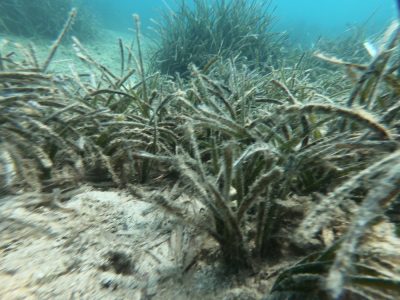
    Sea grass

    Blue carbon ecosystems store carbon in two distinct pools, their plant tissues and the sediment with the latter being the largest. Carbon rich sediment forms as a result of the accumulation of dead plant biomass and can be preserved over millennial timescales. The tissues of coastal plants are particularly resistant to bacterial decomposition due to the low concentration of oxygen in the soil, preventing the release of the carbon they have stored during their lifetime. In addition to locally produced carbon, mangroves and seagrass meadows have the ability to trap carbon floating around in the water, through slowing down water flow and promoting sedimentation of its particles.

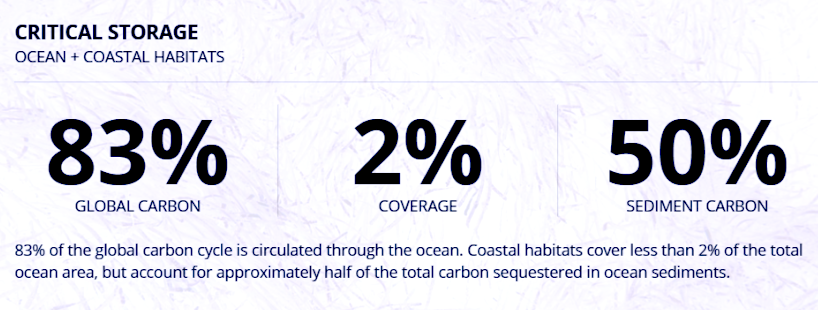
    Coastal ecosystems are capable of storing significantly larger amounts of carbon per unit area than their terrestrial counterparts. On average, they have been found to store even up to four times higher quantities of carbon. This remarkable ability arises due to their high photosynthetic rates, which allow for increased  CO2  absorption from the water, and their extraordinary capacity to lock carbon in their soil creating  large sediment carbon stocks

    blue_carbon_critical_storage

    In addition to their function as carbon sinks, coastal ecosystems provide a range of services necessary for climate change adaptation such as protection from sea level rise and storm surges. Major conservation initiatives, such as the Blue Carbon Initiative, have promoted the efforts to conserve these ecosystems but they continue to degrade at alarming rates. Over the last few decades, mangroves, saltmarshes and seagrass meadows have been declining at an average rate of 100 square kilometres per year, establishing them as some of the most threatened ecosystems on the planet. Inadequate mapping, mainly of seagrass, poses an additional challenge to estimating losses as the original extent cover remains unknown.

    Anthropogenic factors relating to increased coastal development are the main reasons behind their degradation. Naturally, the health of these ecosystems majorly influences their carbon trapping ability. Once the plants are destroyed or removed, their sediment becomes exposed releasing several years worth of trapped carbon back into the water, contributing to the increase of greenhouse gases. Studying Blue Carbon is highly important in fully understanding the role of the oceans in the carbon cycle. Also, increased research attention is crucial in attracting restoration funds and strengthening protection measures.

    Currently, numerous restoration initiatives are taking place yet no greenhouse gas reduction schemes involving these ecosystems have been developed. The creation of such schemes as well as the inclusion of blue carbon ecosystems in the carbon market could provide powerful incentives for their protection.  Given the current levels of CO2 in the atmosphere, it is critically important that these ecosystems are more rigorously protected and restored so they can continue to provide their much needed benefits for people and wildlife.

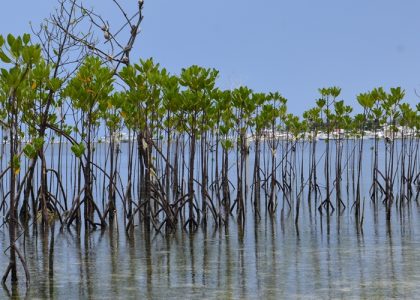
    Malapascua Island, Philippines. (c) Anna Schleimer
    greenturtle_Philippines2
    Mangroves_HongKong

    About the author: Venetia comes from Greece and the Mediterranean sea has always been her happy place. A Biomedical scientist turned conservationist, whose love for the ocean led her to pursue a career in protecting it. Over the years, she has conducted fieldwork in a variety of fields, including dolphin bioacoustics, marine pollution and seagrass carbon. She currently works in Marine Protected Area planning and management in Greece.

    Image credit: Venetia Galanaki, WWF, Joseph Smith, The Blue Carbon Initiative, Anna Schleimer

  • Elkhorn coral
    01April

    Corals – The oases of the oceans are turning to sand

    Article written by marine biologist, Henrique Bravo Gouveia. He is the co-founder of the conservation NGO, Lonely Creatures, which aims to raise awareness about endangered species across the globe. Here is an account taken from his expedition from Argentina to Alaska in the search of endangered species. 

    Reefs, the marine equivalent of tropical rainforests, are one of the most diverse ecosystems on the planet. They are true oases in the vastness of the oceans. Fish, but also nudibranchs, sharks, turtles, sponges, lobsters, algae, sea stars or anemones are some of the species seeking refuge in reefs. They are also one of the most threatened ecosystems. Putting it simply, with the disappearance of coral reefs about 25% of marine species we know could vanish alongside since they wouldn’t stand a chance of survival outside them.

    Humans also stand to lose plenty with the loss of this incredible ecosystem. Over 450 million people live in the vicinity of coral reefs, with many depending directly on the services provided by corals for sustenance and even survival, be it through the fish they provide, the actual coral material that is used for a myriad of things, the tourism it attracts, but also the protection they provide to coastlines. Corals are a first defense against storms, tsunamis or hurricanes, so their disappearance could have catastrophic consequences, mainly in regions that depend a lot on them, such as tropical islands.

    In the crystal blue waters of the Caribbean there are about 100 different species of corals and roughly 500-700 reef-associated fish species. The famous French naturalist Lamarck (1744-1829) was responsible for the identification of many of these corals, probably sitting in a comfortable chair in Paris whilst his disciples had the pleasure of seeing some of these during the 19th century, most likely for the first time. They collected everything they came across and took pieces of all kinds of corals to later have them examined by the master. Two of those species that Lamarck first described in 1816 are now at the risk of extinction, leaving only the pickled museum specimens as proof of their existence. These elkhorn and staghorn corals are intricate and complicated looking specimens of the Acropora family, resembling elk and stag horns as their names suggest. Over the last 40 years more than 80% of the populations of both species disappeared, awarding them the title of critically endangered. These were the two species I was on the lookout for in Panama.

    Beautiful coastline of Isla Escudo Veraguas
    Guide canoes through mangroves
    An immense elkhorn coral reef hiding under the surface

    Isla Escudo Veraguas is an island inhabited by 120 fishermen, and their families, and of slightly difficult access for most tourists passing through the country. It has however pristine reefs, or that’s what I was told. It takes 2 hours each way on a speedboat, making for a bumpy ride, but the destination is definitely worth it. Taken out of a postcard, the colours of the water and sand were a bliss. Palm trees and mangroves everywhere one looks, the only thing missing to complete the picture were the corals.

    It took me a while to process what I was seeing once I dipped my face in the water. Everywhere I looked there were elkhorn corals, everywhere! They came in all sizes, from a few centimetres to a couple of metres from ‘root’ to the tip of the branches. With their dark yellow colour and their incredible shapes, it was hard to look away. They even made you forget you were underwater and that some breaths were necessary from time to time. It was indeed an oasis, with fish swimming in all directions forming a rainbow of colours in those busy coral highways.

    Looking at that incredible abundance of corals, it was hard to imagine they were on the verge of extinction. In sessile species, there can be a high level of abundance in specific areas if the conditions are right and if the threats are little, which happened to be the case. This also means that the conservation of these species is slightly easier compared to highly mobile ones. Preserving the area where the species lives, and its surroundings, can be achieved by setting up marine protected areas and is one of the most successful actions towards the preservation of species. Corals, however, face some additional challenges that we might not be able to solve in time to save them. Rising sea temperatures and ocean acidification are seriously threatening their survival. This is not so much a problem for the corals themselves, but for their algae symbionts (zooxanthellae), which don’t particularly enjoy waters that are too warm. Zooxanthellae form a symbiosis with corals by providing them with up to 90% of the energy they require and are also the ones responsible for the many colours we see in corals. When a certain temperature is reached, which varies from species to species, they detach themselves from the coral, and the coral undergoes a dying process called bleaching, which is what is happening in corals all over the globe (the latest survey at the Great Barrier Reef revealed that over 90% of corals showed signs of bleaching). When they die, the corals start disintegrating, eventually turning to sand.

    Snorkeling over elkhorn reef
    Snorkeling over elkhorn reef

    They are also threatened by human activities like intensive fishing, trawling or high levels of tourism. They are in dire straits, and according to experts, it is likely that corals will disappear altogether within the course of this century. 90% of corals are estimated to vanish by 2050, so now is a good time to go see them and show them to your children.

    I also spotted some staghorn corals while in Panama, albeit with more difficulty and in numbers that did not come close to those of elkhorn. Hiding in crevasses of rocks, or at depths that required scuba diving, and with sizes never exceeding 20-30 centimetres, they weren’t as memorable as their relatives, but still beautiful nonetheless and with more apparent delicate structures. Sadly, the majority of the ones I saw were in the process of bleaching. I’m sure there must be some spots where staghorn corals are still thriving and look as impressive as elkhorn did for me off the coast of Escudo Veraguas, I just didn’t get to see them.

    Lamarck was one of the founders of the theories of evolution. It’s sad to think that the species he described for Science could soon disappear and might not play a role in the evolution of other species in the future.

    Like all species that are facing extinction, things can look bleak and depressing, but there are almost always researchers and conservationists working towards their preservation, and corals are no exception. I have no doubt that the incredible level of species diversity we have now will take a toll, but corals might have a fighting chance if scientists, governments, and the general public work together to minimise the effects of climate change and grant coral reefs the protection they deserve.

    Staghorn
    Henrique inspecting the staghorn coral
    Elkhorn coral reef

    More information about Lonely Creatures and Henrique’s expedition can be found here and here.

    This article was originally published on Wilder.pt. Photos taken by Anna Schleimer and Henrique Bravo Gouveia.

© 2026 ODYSSEA ASBL
  • Home
  • About
  • News
  • Contact