• Sign in

  • Join for free
  • Home
  • News
  • A propros
    • L’équipe d’ODYSSEA
    • Sponsors
    • Collaborateurs
  • Projets
    • Evénements
    • Projets passés
    • Recherche et conservation
  • Soutenir Odyssea
  • Publications
  • Photos
  • Contact
ODYSSEA - Marine research and awareness

Search

    • en
    • fr
  • info@odyssea.lu
0
ODYSSEA - Marine research and awareness
  • Menu
  • Home
  • News
  • A propros
    • L’équipe d’ODYSSEA
    • Sponsors
    • Collaborateurs
  • Projets
    • Evénements
    • Projets passés
    • Recherche et conservation
  • Soutenir Odyssea
  • Publications
  • Photos
  • Contact

Tag : field course

Home » Tagged "field course"
  • Humpback whale breach
    10août

    Whale Research and Conservation in the St Lawrence

    Text written by Félix Feider, 22-year-old final year undergrad studying Marine Sciences at the National University of Ireland, Galway. He participated in a 2-week research programme at the Mingan Islands Cetacean Study in Longue-Pointe-de-Mingan, Québec, Canada.

    My whale research adventure in Canada started in late July. I boarded a Dash from Montreal to Sept-Iles, said goodbye to the big city life and hello to the Canadian wilderness. After a 2-hour drive, I arrived in small, but charming, Longue-Pointe-de-Mingan on the North Shore. It was immediately clear that this region is a hidden gem, with little tourists coming here and a lot of people never even having heard of it (including me until a few months ago). On the north side of the town is vast, seemingly endless dense forest and on the south side is the Mingan Islands Archipelago and the St. Lawrence, sprawling with life. The weather in this region is very volatile, with cloudless skies suddenly turning stormy and rainy. Only good weather conditions allowed us to go out on sea to look for whales. On a good day we would get up at 6am and prepare the 2 inflatable boats to be ready to leave Mingan at 7:30. The archipelago itself hosts a range of smaller marine mammals, such as seals, porpoises and even minke whales. However, the main focus of the research station lies on blue whales, fin whales and humpback whales in the St. Lawrence, which use the highly productive waters closer to Anticosti Island in the south as feeding grounds. After a 1.5-hour drive, the first whales could be spotted. The very first whale that I saw was a right whale, which are relatively new to this area and have encountered hazardous events here in the last weeks, with close to two percent (10 individuals) of the North Atlantic population (estimated to be slightly higher than 500 individuals) having died due to anthropogenic reasons, such as ship collisions and fishing gear entanglements. The North Atlantic right whale is listed as critically endangered, meaning that the species is at risk of going extinct if more animals keep dying than entering the population.

    • Critically endangered right whale
    • Harbour porpoises are the smallest cetaceans in the St Lawrence.
    • Right whale in the St Lawrence
    • Félix on the North Shore

    The research station mainly uses two means of monitoring the cetacean populations. The first and most abundantly used method is photo identification (photo-ID), where pictures are taken of the whale’s unique ¨fingerprint¨ to allow identification. This fingerprint refers to a body part of the whale that has a shape and/or pigmentation pattern unique to each individual and that can be used to identify individual whales just using a few pictures. The defining features used for photo-ID changes from species to species. The humpback whale is the easiest to identify: a picture from the right and left side of the dorsal fin and the ventral side of the fluke show highly distinctive shapes and pigmentation patterns. Fin whale identification is based on pictures of the right side dorsal fin and the area behind the blowholes, which hosts what is called the blaze and chevron, pigmentation patterns that are unique to an individual, but much more complicated to differentiate to an untrained eye such as mine. The blue whale was once abundant in this region, but since the early 1990s their numbers in this region have shriveled and only a handful of individuals are nowadays seen here every season. Sadly I did not have the chance to see one myself. Photos are also used to investigate how many animals have been entangled in fishing gear, particularly by examining the number of animals with scars around their peduncle, which is the area where the tailstock meets the fluke.
    • The ventral side of the fluke of humpback whales is used to differentiate among individuals
    • The chevron is used for photo-identification in fin whales
    • The blow of fin whales can be spotted from a great distance. MICS Photo
    • Humpback whale cow and calf

    The second most used method of monitoring the populations is biopsy sampling. An arrow with a 3 cm long hollow metal tube as tip is placed at the region below the dorsal fin, at a perpendicular angle, using a crossbow. The tip only pierces the skin and the top layer of the fat layer, or blubber, which probably feels like a small mosquito bite to the whale. The skin and blubber are later separated in the lab and used for different analyses. The skin is used to extract the DNA, which is in turn used to genetically determine the sex of the individual and to learn more about the population structure and gene pool by defining relationships among individuals. The blubber is used for studies on toxicity load, hormones and pregnancy rates. All these data sets become even more valuable over long term study and since the station is now operating for 38 years, the amount of data collected to date is huge and has already helped us understand a lot about migration, behaviour, life cycle, sexual maturity and much more. Whenever the opportunity arises, researchers also collect fecal (poo!) samples which hold valuable information on the diet and body condition of the animals. That way we can learn what the whales feed on and how healthy they are.

    On top of the two above stated methods, the station also uses several tagging methods to monitor the behaviour of the animals underwater. It is important to remember that most of the research here focuses on the brief moments that whales spend on the sea surface, however our knowledge about their behaviour below the surface is very limited at best. Tagging can tell us about the depths they travel to, their feeding behaviours, their diving patterns, migration pathways, important feeding grounds and much more. The problem about tags are numerous though; they are quite expensive (some cost 25.000$), it is difficult and time consuming to place them, they can sometimes hold for just a few minutes and rarely longer than a month and new studies show that the whales’ behaviour is influenced by the tags and therefore the data could be misleading. Despite these problems, certain individual cases in which the tags have stayed put over a long period of time have shed light on some of the many question that are still unanswered. For instance two tagged blue whales have been monitored to stop north of the New England Seamounts to feed over a few days before continuing their migration, the assumed importance of this region to this species was previously not known.

    • Researchers use the blow (here of fin whales) to spot the animals from the distance
    • Breach of a humpback whale, always a spectacular sight
    • Before the humpback whale dives, it lifts the fluke high out of the water.
    • Fin whale cow and calf in the St Lawrence

    After a long day at sea, having seen and photographed a lot of whales and sampled a few biopsies if possible, we returned to the pier in Mingan. Dinner was always provided at the only restaurant in Longue-Pointe, Le Macareux Dodu, and breakfast at La Chicoutée, both of which had amazing food and the service was always extremely friendly. Everybody whom I’ve met in town was extremely welcoming and it was very interesting to get to know their stories and way of life. On rainy, foggy or windy days we could not go out to sea. Instead I visited the station’s museum, I got presentations about the history of the station, their work, future plans, I went to an Innu Cultural Centre or simply helped at the station, identifying and matching whales that were photographed on previous days or helped wherever else I could. One of the best parts of my experience here was the team. It was an international melting pot of scientists from all around the world, with different backgrounds and each and every one was very welcoming, friendly and helpful. I got to know a lot of amazing, fascinating characters that became friends and who I am hoping to meet again sometime in the future.

    To conclude, the 2 weeks that I spent at the Mingan Islands Cetacean Study were fascinating. I learned a lot about marine mammology that I am looking forward to implementing into my future academic career choices. I got spoilt with the diversity and amount of marine life on the St. Lawrence, having sighted numerous fin, humpback, minke and right whales, porpoises, seals and even a few basking sharks, on a good day I saw more than 20 whales. Since my major interest is in marine conservation, I now know the hard work that is required to gather population data for conservation efforts to be possible. My days at the station and time outside working hours were very informative and interesting as well. Long story short, I had an absolutely great time. Since there are still more questions than answers regarding cetaceans and every answer reveals new questions, their work here is far from done and there are many future research opportunities still available. I highly recommend this experience to anybody who wants to know more about whales, cetacean study, the methods of research and the life at a remote research station, I can promise you that you will not regret coming here.

    • Beautiful rock formations on the North Shore
    • On windy days there was time to explore the North Shore
    • Félix scanning the horizon for whales
    • The North Shore
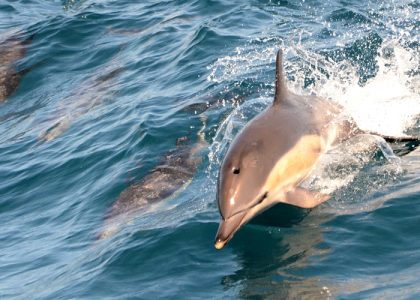
  • Common dolphin
    08janvier

    Cetacean Field Course in Tarifa (Spain)

    12 days in July 2017 (exact dates to be confirmed)

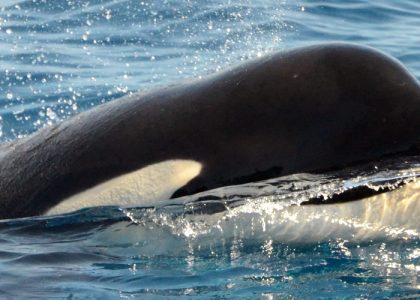
    The Tarifa field course is Odyssea’s most popular project. Situated at the southernmost tip of Europe, Tarifa is the perfect setting for a cetacean field course. The Strait of Gibraltar is home to seven species of whales and dolphins: pilot whales, bottlenose dolphins, striped dolphins, common dolphins, sperm whales, fin whales, and killer whales. The first four species are year-round residents with the pilot whales being the most commonly observed species. Our field course in July usually coincides with the presence of killer whales, which hunt the tuna passing through the Strait of Gibraltar. Fin whale sightings are rarer; nicknamed “greyhound of the sea”,  a small number of fin whales move each year from the Mediterranean to the Atlantic and despite their size they can be easily missed.

    During the field course, you’ll be introduced to the biology and ecology of whales and dolphins, with particular focus on the seven occurring species. You will be accompanied by experienced marine biologists who will teach you about the main methods used to study these animals, namely behavioural observations and photo-identification. You will be able to put your newly acquired knowledge to use during the boat trips with our partner Turmares. During a visit of a local rehabilitation center, you will learn more about the biology of dolphins and marine turtles and the threats they face (e.g. plastic pollution, entanglement, or noise pollution).

    Tarifa and its surroundings are also famous for its excellent bird-watching opportunities and is a must-do activity! There is usually also time for a trip to Roman ruins, the Rocks of Gibraltar and various sandy shores. For an account from one of our past interns, we’d recommend reading Livia’s article here.

    For more information, please do not hesitate to contact us under info@odyssea.lu. Information on exact dates and prices will be published as soon as available.

    • killer whale pod
    • Pilot whale newborn
    • Tarifa group picture
    • Tarifa telescope work
    • pilot whale spyhop
    • Tarifa chameleon
    • killer whale 1
    • dsc_6167
    • tarifa_boatwork
    • common dolphin1
    • ruins_tarifa
    • dsc_8501-2
    • dsc_9363
    • Gibraltar scope
    • dsc_0541
    • dsc_5340
  • Killer whale Tarifa
    09novembre

    TARIFA Détroit de Gibraltar

    orques

    Qui n’a pas envie de rencontrer ces créatures majestueuses que sont les orques, mais sans eau chlorée et musique spectaculaire? Tarifa est l’endroit parfait pour ça. En été, Odyssea organise des stages au point le plus au sud de l’Europe continentale, dans le détroit de Gibraltar. Avec un groupe d’une demi-douzaine de personnes, il est possible d’embarquer sur un bateau de whale-watching à la recherche d’orques. Il y a de grandes chances de tomber sur d’autres mammifères marins: plusieurs espèces de dauphins habitant le détroit, et avec un peu de chance, un rorqual commun de passage dans le détroit. On apprend le fonctionnement de la technique de photo-identification, qui permet d’identifier et reconnaitre des individus grâce au marquage unique sur leur nageoire dorsale. A coté du temps passé en mer, il reste presque toujours un peu de temps pour explorer la petite ville de Tarifa, aller jusqu’à Gibraltar et le Top of the Rock, ou passer une demi journée aux ruines romaines de Bolonia.

    Un stage à Tarifa, c’est aussi dire bonjour à la tête de Chucky au bord de la route, rencontrer les singes à Gibraltar, se rendre compte que Pierre connait tout le monde à Tarifa, manger la meilleure pizza au monde après l’avoir découpée avec des ciseaux, peut-être avoir le mal de mer et rater les baleines, mais les autres ont pris des photos alors c’est moins grave. On peut profiter de la pause de midi pour bronzer une demi heure au soleil ou jouer dans les vagues, grimper en haut de la dune de Bolonia et idéalement rouler jusqu’en bas. En gros, c’est un voyage au cours duquel on apprend beaucoup grâce aux exposés de Pierre tous les soirs, ainsi que le travail sur le terrain, mais on apprend aussi à connaitre des personnes avec les mêmes centres d’intérêts, et s’amuser avec l’équipe du stage.

    Texte rédigé par Livia Gavard, dont la compagnie nous a apporté beaucoup de rires et de joie lors des stages de Tarifa et Floride.

  • Grey_Whale_Breach
    21septembre

    Gray Whale Field Course with Sea Kayak Adventures

    The Eastern Pacific gray whales mark one of the greatest conservation success stories after their phenomenal recovery from several hundred animals left after whaling in the early 1900s to a current population of over 20,000 animals. Every year, gray whales undertake one of the longest migrations in the animal kingdom, migrating from their summer feeding grounds in the arctic waters of the Bering Sea to the breeding lagoons in Baja California, Mexico.

    One of these breeding lagoons, Magdalena Bay, was the setting for a pilot project run by Odyssea in collaboration with  ROW Sea Kayak Adventures from 29 Feb to 9 Mar 2016. The aim of the project was twofold: Odyssea researcher Anna Schleimer was introducing her two interns to the main research techniques used to study marine mammals, while also assessing the potential of organising regular internships in Magdalena Bay. The location could not have been any better: tenting on the sand dunes surrounding the shallow lagoons, we could easily spot gray whale cows and calves from shore while drinking our early morning coffee. Once described as “devil fish” for the way they attacked whalers, gray whales in the lagoons are now known as the “friendly whales” as some animals readily approach whale watching boats and seem to enjoy a good scratch from the ecstatic tourists.

    Equipped with cameras and GPS, the team hopped onto small fishing boats, locally known as pangas, to start their daily surveys. Every gray whale has a unique pigmentation pattern, which lends itself to the identification of individuals, just like human fingerprints! By taking pictures of these unique patterns on the flanks of the whales, a technique known as photo-identification, researchers can keep track on the total number of animals visiting the lagoons for example. Over the course of our stay we identified 13 separate cow and calf pairs. Needless to say that for an untrained eye all whales look the same, even for the two interns Gaynell and Zoe. But within days, they memorised distinct marks or scars for every individual and could identify previously encountered animals with ease. Throughout the week, we had interesting discussions about conservation, code of conduct, whale watching, and how Odyssea could get involved in the future.

    By the end of the field course, most animals had left the lagoon to start their migration north to their feeding grounds in the Arctic. Some friendly gray whales approached also our boat, a very curious behaviour where the cow pushes the calf to the boat. During land-surveys, the full extent of the whale watching activity became evident; at peak times 13 pangas loaded with cheerful tourists followed a single cow and calf pair. While there is a code of conduct in place to prevent such overcrowding, the regulations are poorly enforced in Magdalena Bay and the panga captains believe that only a client that gets to pet a whale is a happy client willing to give a good tip. The issue was discussed with the local guides, who agreed that the reinforcement of the code of conduct needs improving. Odyssea will follow up on the development of this topic.

    When the team returned to civilisation after 9 days at whale camp as amateur astronomers, bird-watchers, and coyote-track readers, they realised how much they had learnt and all agreed that they had exceeded their goals for the trip.

    Anna Schleimer, vice-president of Odyssea

    • grey_whale_fluke1
    • grey_whale_pair2
    • sand_dunes
    • tent_camp
    • sea_lions2
    • pelicans2
    • scorpion
    • coyote_tracks
    • sunset_guests
    • bottlenose_camp
    • sea_lion1
    • blowhole
    • grey_whale_calf
    • pelicans1
    • grey_whale_pair3
    • grey_whale_pair1
    • grey_whale_fluke2
    • grey_whale_camp
    • coyote_mangrove
© 2026 ODYSSEA ASBL
  • Home
  • A propos
  • News
  • Contact